Wednesday, 2 September 2026

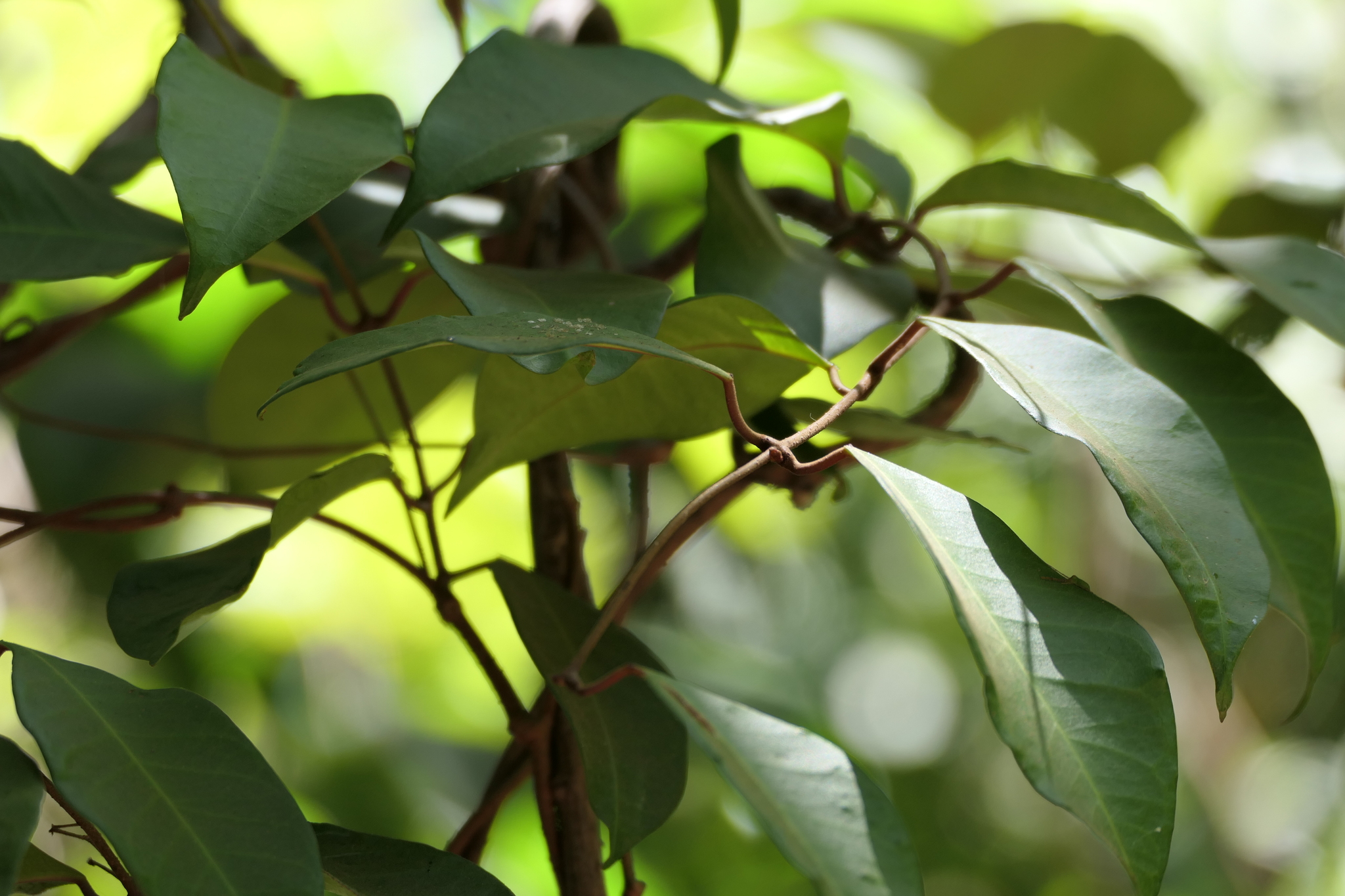
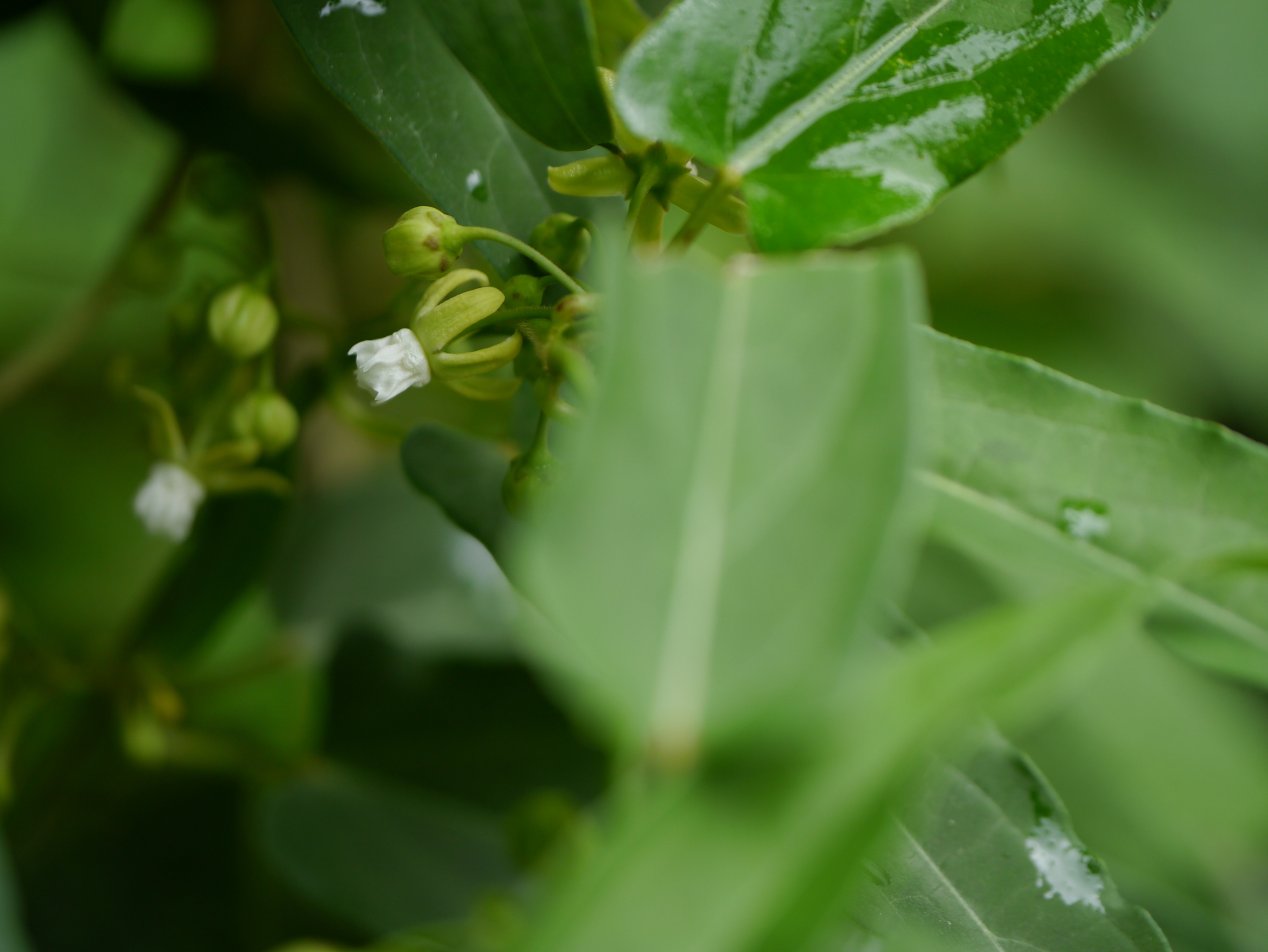
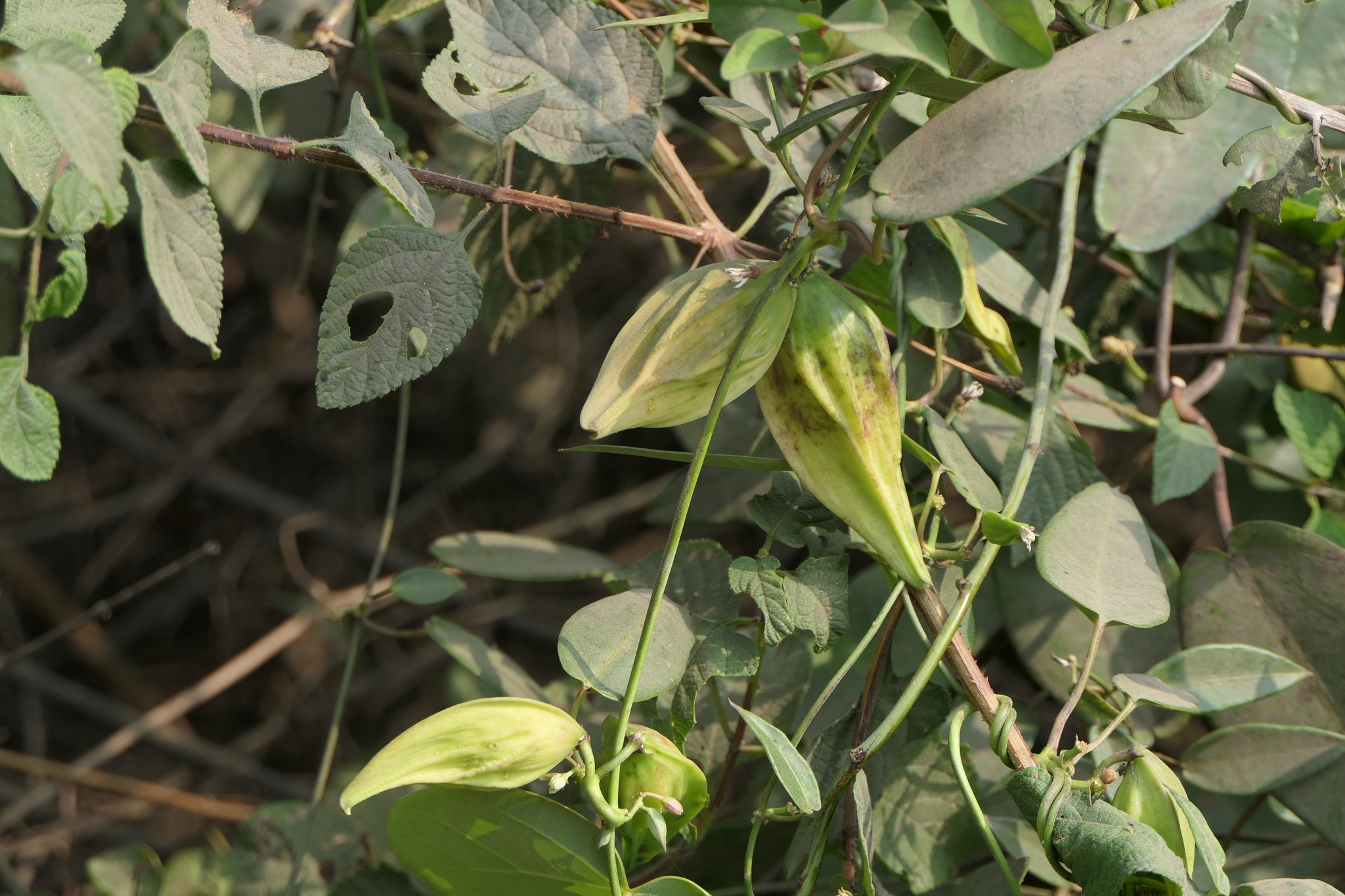
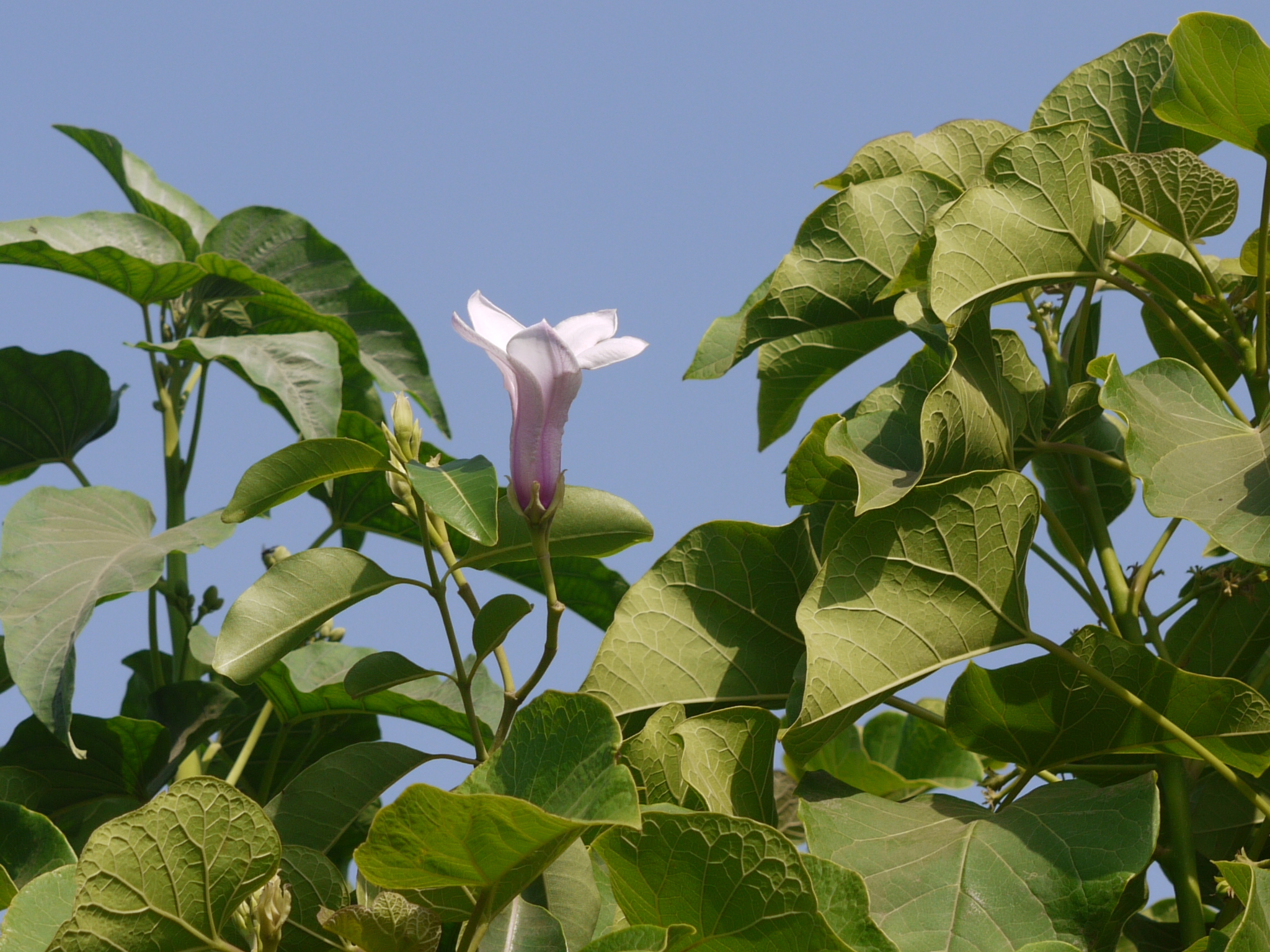
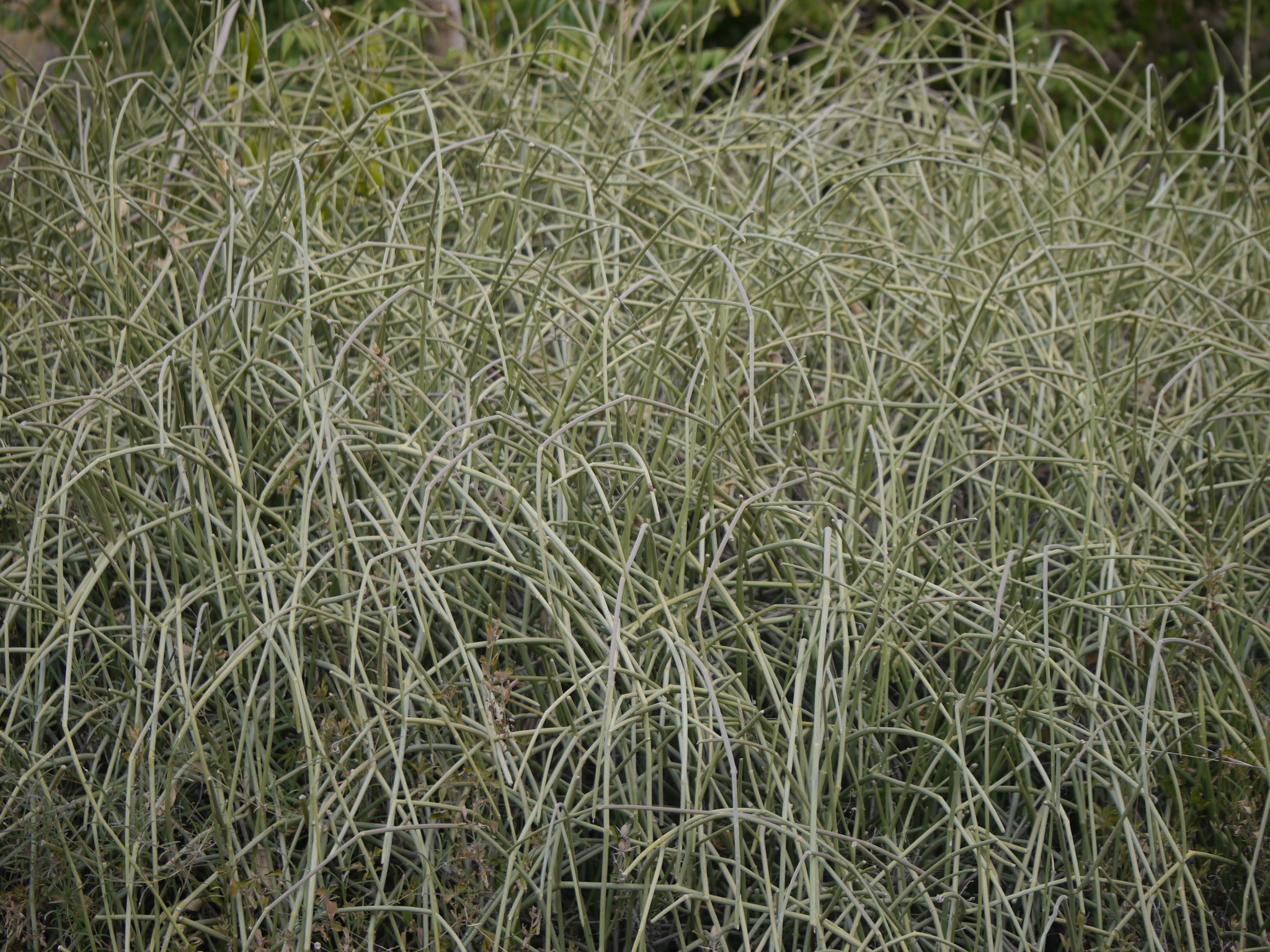
Secamone laurifolia (Hook.f.) K.Schum.

Secamone laurifolia (Hook.f.) K.Schum.

se-kuh-MOH-nee -- derived from squamona, an historical Arabic name used for some other plant ... compiled from the web
law-ree-FOH-lee-uh -- laurel-like leaves ... Dave's Botanary
commonly known as: laurel-leaf milkweed • Nicobarese: ponyam

known for / parts made use of: the leaves, the stems and twigs, the milky sap (latex) ... compiled from the web.
botanical names: Secamone laurifolia (Hook.f.) K.Schum. ... homotypic synonyms: Asclepias laurifolia Roxb. • Genianthus laurifolius Hook.f. ... and more at POWO, retrieved September 01, 2026
Bibliography / etymology / notes
Links listed as references in the notes below, may not remain valid permanently. Portals / websites have a tendency to re-organize / revise their content, leading to change in URLs of pages in their site. Some sites may even close down at their own will. The bits about the languages of India mentioned below are merely some bare facts gathered from the internet; just enough to satisfy curiosity about "where" could the listed names be best prevalent in India. All English transliterated names to be taken sensu amplo.
~~~~~ ENGLISH ~~~~~
written and spoken widely, in most parts of India
laurel-leaf milkweed
  • for Genianthus laurifolius Hook.f. ... Flowers of India ... (accessed: September 01, 2026)
~~~~~ NICOBARESE ~~~~~
written in: Latin ... spoken in: Nicobar islands ... spoken by Nicobarese people ... Six distinct dialects and languages are spoken in the Nicobar Archipleago
ponyam
~~~~~ KNOWN DISTRIBUTION in INDIA ~~~~~
Andaman & Nicobar islands, Assam, Goa, Karnataka, Kerala, Maharashtra, Sikkim, West Bengal
~~~~~ Created on: 20:43 01-09-2026 ¦ Last updated: 10:56 02-09-2026 (DD-MM-YYYY) ~~~~~
Apocynaceae perennial climber "twining shrub" "Secamone laurifolia" "Asclepias laurifolia" "Genianthus laurifolius" "laurel-leaf milkweed"

.

Tuesday, 1 September 2026

Cynanchum viminale (L.) L.

Cynanchum viminale (L.) L.

sigh-NAN-kum or sigh-NANG-kum -- Greek: kyon (dog); anchein (to choke or strangle); refers to the historical toxic qualities of several European species within this genus that were observed to poison animals ... compiled from the web
vim-in-AH-lee -- long, slender shoots ... Dave's Botanary
commonly known as: caustic vine, milk rope, sacred soma, soma • Assamese: চন্দ্ৰলতা sondrolota, সোমলতা xomlota • Bengali: সোমলতা soma-lata • Gujarati: ચીરોડી chirodi, સાંઢીયાવેલ sandhiyavel, સોમવલ્લી somvalli • Hindi: सोम soma • Kachchhi: છીરવલ chhirval, કરાડવલ karadval, સાંઢીયાવલ sandhiyaval • Kannada: ಹಂಬುಕಳ್ಳಿ hambukalli, ಕೋಣನಹಂಬು konanahambu, ಸೋಮ soma, ವಸುಕಾಂತಿ vasukaanthi • Kol: कुला तुआर kula tuar • Malayalam: സോമം somam • Marathi: रानशेर ransher, सोमलता somlata • Odia: ବଡ଼ହୁଇ bada hui, ଲଟାସିଜୁ lata siju, ଶ୍ୟାମା shyamaa, ସୋମଲତା somalata • Punjabi: ਸੋਮ som • Rajasthani: खिर खींप khir khimp • Sanskrit: चन्द्रवल्लरी chandravallari, धनुर्लता dhanurlata, द्विजप्रिया dvijapriya, गुल्मवल्ली gulmavalli, इन्दुलेखा indulekha, इन्दुवल्ली induvalli, महागुल्म mahagulma, पद्मकाष्ठ padmakashtha, सोम soma, सोमक्षीरी somakshiri, सोमलता somalata, सोमार्ह somarha, सोमवल्ली somavalli, सुरेष्ट sureshta, यज्ञाङ्ग yajnanga, यज्ञश्रेष्ठ yajnashreshtha, यज्ञवल्ली yajnavalli • Sindhi: ڏُنبَرُ dumbar, ٿوهرِنجلُ thohrinjal • Tamil: கொடிக்கள்ளி kodikkalli, சோமம் somam • Telugu: దుష్టపు తీగ dustappa tiga, ఎరిపులింగ eripulinga, జిగటషుముడు jigatshumoodoo, కొరకల్లి korakalli, కాడు జెముడు kadu jemudu, కొండపాల kondapala, పద్మ కాష్ఠము padmakashtam, పుల్ల జెముడు pulla jemudu, పుల్ల తీగ pulla tige, సోమలత somalata, సోమము somamu, తీగ జెముడు theega jamudu • Tulu: ಸೋಮವಲ್ಲಿ somavalli • Urdu: سوم soma

known for / parts made use of: stems — (cladodes, most widely used part), milky sap — (latex, well-known for its caustic nature), roots — (well-known for counter-toxins), whole plant juice — (the ancient "soma" connection) ... compiled from the web
botanical names: Cynanchum viminale (L.) L. ... homotypic synonyms: Sarcostemma viminale (L.) R.Br. ... accepted infraspecific: Cynanchum viminale subsp. viminale ... heterotypic synonyms: Asclepias acida Roxb. • Cynanchum acidum (Roxb.) Oken • Sarcostemma acidum (Roxb.) Voigt • Sarcostemma brevistigma Wight & Arn. ... accepted infraspecific: Cynanchum viminale subsp. stipitaceum (Forssk.) Meve & Liede ... homotypic synonyms: Sarcostemma stipitaceum (Forssk.) Schult. ... and more at POWO, retrieved August 28, 2026
Bibliography / etymology / notes
Links listed as references in the notes below, may not remain valid permanently. Portals / websites have a tendency to re-organize / revise their content, leading to change in URLs of pages in their site. Some sites may even close down at their own will. The bits about the languages of India mentioned below are merely some bare facts gathered from the internet; just enough to satisfy curiosity about "where" could the listed names be best prevalent in India. All English transliterated names to be taken sensu amplo.
~~~~~ ENGLISH ~~~~~
written and spoken widely, in most parts of India
caustic vine, milk rope, sacred soma, soma
  • Flowers of India ... (accessed: August 28, 2026)
  • Caustic vine [↗] gets its name from the burning, milky sap inside its green stems. Breaking the stems releases a milky white latex sap that irritates human skin and eyes, and acts as a poison to livestock.
  • Milk rope perfectly describes the plant's long, flexible stems and the thick white sap inside them. Milk — the stems are filled with a toxic, milky latex sap that squirts out when the plant is cut or broken. Rope — the long, leafless, cylindrical green stems intertwine and tangle together, looking exactly like green ropes draped over bushes or rocks. It behaves like a vine, using its rope-like structures to scramble across the ground or climb up nearby trees for support. ... compiled from the web.
  • Sacred soma — Because the exact botanical identity of the original Vedic Soma plant was lost over thousands of years, it remains one of history’s greatest mysteries. However, Cynanchum viminale became the leading proxy. When the original, elusive Soma plant could no longer be found, ancient priests and Ayurvedic practitioners turned to Cynanchum viminale as its primary ritual and therapeutic substitute. [↗].
  • In later Hindu mythology, the deity Soma became closely associated with the Moon. Cynanchum viminale is occasionally called the "Moon plant" or "Moon creeper" because its leafless, luminous grey-green stems were poetically thought to expand and contract in tune with the phases of the moon. [↗].
THE ONGOING IDENTITY DEBATE
While Cynanchum viminale holds the official title of "Soma" in modern Ayurveda, historians and ethnobotanists actively debate what the true, original Vedic plant actually was Ephedra. Many scholars point to Ephedra species, which contain stimulants that match the Vedic descriptions of providing energy, wakefulness, and drive before battle. [↗]
~~~~~ ASSAMESE ~~~~~
written in: Assamese (অসমীয়া) ... spoken in: Assam, Arunachal Pradesh, Meghalaya
চন্দ্ৰলতা sondrolota, সোমলতা xomlota
  • for Asclepias acida Roxb. ... XOBDO - Your gateway to multilingual knowledge and resources ... (accessed: September 01, 2026)
  • The Assamese name চন্দ্ৰলতা (Sondrolota) is documented in the XOBDO regional linguistic database for this species. Borrowed directly from classical Sanskrit roots, the compound literally denotes 'the crescent moon-creeper'. The inclusion proves that communities within the Brahmaputra basin structurally maintained the plant's ancestral mapping to the lunar taxonomy of the Soma lineages, serving as the primary literary vernacular title for the species in northeastern India. ... compiled from the web.
  • The Assamese designation সোমলতা (Xomlota) is officially indexed in the XOBDO database for this taxon. While etymologically identical to the standard Devanagari compound Somalata, the regional phonetic profile shifts to a distinct, soft sibilant "Xomlota" native to the Brahmaputra valley. This widespread classical loanword serves as the primary literary title in the state, verifying that the regional flora continues to carry historical ties to ancient Vedic nomenclature. ... compiled from the web.
~~~~~ BENGALI ~~~~~
written in: Bengali (বাংলা) ... spoken in: West Bengal, Assam, Jharkhand, Tripura, Andaman & Nicobar Islands
সোমলতা soma-lata
  • for Sarcostemma brevistigma Wight & Arn. ... PRAIN, DAVID - BENGAL PLANTS - VOL. II
  • সোমলতা (Somalata) — Officially documented in Sir David Prain’s foundational botanical compendium, 'Bengal Plants' (1903), under the plant's historic synonym Sarcostemma brevistigma. This inclusion demonstrates that colonial-era field botanists actively recorded the Sanskrit-derived compound সোমলতা as the recognized vernacular name used by local communities across undivided Bengal. It serves as a vital linguistic record, showing that the plant's connection to classical Vedic taxonomy was well-preserved in the eastern plains of the subcontinent. ... compiled from the web.
~~~~~ GUJARATI ~~~~~
written in: Gujarati (ગુજરાતી) ... spoken in: Gujarat, Dadra & Nagar Haveli, Daman & Diu
ચીરોડી chirodi, સાંઢીયાવેલ sandhiyavel, સોમવલ્લી somvalli
  • for Sarcostemma brevistigma Wight & Arn. ... વનસ્પતીઓ ના ગુજરાતી તથા બોટનીકલ નામ ની યાદી :: સંકલન કર્તા વૈધ શ્રી કે,જે,ઝાલા ... (downloaded: 19 Jan 2026)
  • Documented by Vaidya Shri K. J. Jhala in his comprehensive compilation of regional botanical nomenclature, Sarcostemma brevistigma (syn. Cynanchum viminale) carries names reflecting both its physical structure and its landscape. The title સાંઢીયાવેલ (Sandhiyavel) translates literally to 'The Camel Vine', mapping its jointed stems to the long legs of desert riding-camels. The name ચીરોડી (Chirodi) references its tendency to bleed thick white latex when cut, while the classic loan-word સોમવલ્લી (Somvalli) maintains its formal script relationship to Ayurvedic text history. ... compiled from the web.
~~~~~ HINDI ~~~~~
written in: Devanagari (हिन्दी) ... spoken in: Delhi, Uttar Pradesh, Bihar, Chhattisgarh, Haryana, Jharkhand, Madhya Pradesh, Rajasthan, Uttarakhand
सोम soma
  • for Sarcostemma viminale (L.) R.Br. ... Platts, John T. (John Thompson). A dictionary of Urdu, classical Hindi, and English. London: W. H. Allen & Co., 1884.
  • Dev, Suresh. (2017). Phytochemical and Pharmacological aspects of Sarcostemma acidum (Roxb.) Voigt. Journal of Pharmacy Research. 11. 1429-1431. ... (accessed: August 30, 2026)
  • In John T. Platts' landmark 1884 trilingual dictionary, the word is beautifully tracked across parallel scripts: the Hindi सोम (soma) in Devanagari, and its direct phonological Urdu counterpart سوم (soma) in the Perso-Arabic script. Platts explicitly logs it as a masculine noun borrowed from Sanskrit, identifying it directly with the famous "moon-plant" (Sarcostemma viminale, the classic synonym of Cynanchum viminale).
~~~~~ KACHCHHI ~~~~~
written in: Gujarati (કચ્છી), Sindhi (ڪڇّي) ... spoken in: Kutch region of Gujarat
છીરવલ chhirval (or ચીરવલ chirval), કરાડવલ karadval, સાંઢીયાવલ sandhiyaval
  • for Sarcostemma brevistigma Wight & Arn. ... કચ્છ સ્વસ્થાન ની વનસ્પતિઓ ઠાકર જયકૃષ્ણ ઇન્દ્રજી 1926 [PLANTS OF CUTCH AND THEIR UTILITY by THAKAR, JAIKRISHNA INDRAJI, 1926]
  • The 1926 botanical treatise Plants of Cutch and Their Utility by Thakar Jaikrishna Indraji documents three distinct Kachchhi dialect names reflecting the plant's ecological and structural traits. The designation છીરવલ (Chhirval) derives from the Sanskrit root for milk to denote a milk-vine, કરાડવલ (Karadval) translates to cliff-face vine based on its habitat in arid rock fractures, and સાંઢીયાવલ (Sandhiyaval) indicates an association with desert camels. ... compiled from the web.
~~~~~ KANNADA ~~~~~
written in: Kannada (ಕನ್ನಡ) ... spoken in: Karnataka
ಹಂಬುಕಳ್ಳಿ hambukalli, ಸೋಮ soma
  • for Sarcostemma acidum (Roxb.) Voigt ... Alar - an authoritative Kannada-English dictionary corpus created by V. Krishna
  • ಹಂಬುಕಳ್ಳಿ hambukalli — The name is a literal folk-taxonomic compound. ಹಂಬು (Hambu) means a climbing vine, creeper, or traveler, while ಕಳ್ಳಿ (Kalli) is the generic regional category used for milky-sapped, leafless, or thorny desert succulents (spurges/milkweeds). ... compiled from the web.
  • The Kannada name ಸೋಮ (Soma) is a direct linguistic adaptation of the ancient Sanskrit word Soma, which carries deep roots in Indian history, philosophy, and botanical taxonomy. In Kannada botanical contexts, it is frequently used interchangeably with extended variations like Somalathe (ಸೋಮಲತೆ) or Somaballi (ಸೋಮಬಳ್ಳಿ), where the suffixes -lathe and -balli explicitly describe its nature as a climbing vine or creeper. ... compiled from the web.
ಕೋಣನಹಂಬು konanahambu
ವಸುಕಾಂತಿ vasukaanthi
  • Dev, Suresh. (2017). Phytochemical and Pharmacological aspects of Sarcostemma acidum (Roxb.) Voigt. Journal of Pharmacy Research. 11. 1429-1431. ... (accessed: August 30, 2026)
  • for Sarcostemma acidum (Roxb.) Voigt ... Alar - an authoritative Kannada-English dictionary corpus created by V. Krishna
  • An elegant linguistic connection emerges when analyzing the classical name ವಸುಕಾಂತಿ (Vasukaanthi). While 'Vasu' classically denotes solar deities or wealth, ancient lexicons (like the Monier-Williams corpus) also define 'Vasu' as a rope, thong, or rein. ಕಾಂತಿ (Kaanthi): Translates directly to "glow", "splendour", "radiance" or "brilliance". Given that this leafless succulent is globally nicknamed the 'Milk rope' due to its cord-like stems, the name వసుకాంతి (Vasukaanthi) beautifully double-serves as a poetic descriptor meaning 'the radiant rope' or 'the beautiful vine'. ... compiled from the web.
~~~~~ KOL ~~~~~
written in: Warang Chiti (or Barang Kshiti, Varang Kshiti), Devanagari ... spoken in: Jharkhand, Madhya Pradesh, Odisha, West Bengal ... spoken by: Kol people
कुला तुआर kula tuar
  • for Sarcostemma brevistigma Wight & Arn. ... A forest flora of Chota Nagpur including Gangpur and the Santal-Parganahs by Haines, Henry Haselfoot, 1867-1943
  • Frequently miscopied as 'Kula Thar' in pharmaceutical texts, tracking the name to H.H. Haines' 'A Forest Flora of Chota Nagpur' (1910) yields the authentic tribal name 'Kula Tuar'. By comparative analysis of Haines' records for other milky-sapped species, 'Tuar' (or Toa) is the literal Munda/Santali word for milk. Paired with 'Kula' (Tiger), the vernacular name for Cynanchum viminale brilliantly translates to 'Tiger's Milk' — a vivid ethno-botanical descriptor for the plant's thick, remarkably caustic, and toxic white latex. ... compiled from the web.
~~~~~ MALAYALAM ~~~~~
written in: Malayalam (മലയാളം) ... spoken in: Kerala, Lakshadweep
സോമം somam
  • for Cynanchum acidum (Roxb.) Oken ... Gundert, Hermann. A Malayalam and English dictionary. Mangalore, London, C. Stolz; Trübner & Co., 1872.
  • Borrowed directly from the classical Sanskrit root, the designation links the plant's distribution in the southern peninsula to historical botanical lineages. While contemporary coastal databases occasionally use the expanded variant സോമവളളി Somavalli, Gundert's early text establishes that the concise, traditional title was formally logged over a century ago to identify the species within the regional landscape. ... compiled from the web.
~~~~~ MARATHI ~~~~~
written in: Devanagari (मराठी) ... spoken in: Maharashtra, Karnataka
रानशेर ransher, सोमलता somlata (variant: सोमवेल somvel)
  • for Sarcostemma viminale (L.) R.Br. ... Molesworth, J. T. (James Thomas). A dictionary, Marathi and English. 2d ed., rev. and enl. Bombay: Printed for government at the Bombay Education Society's press, 1857.
  • Dev, Suresh. (2017). Phytochemical and Pharmacological aspects of Sarcostemma acidum (Roxb.) Voigt. Journal of Pharmacy Research. 11. 1429-1431. ... (accessed: August 30, 2026)
  • The Marathi term "रानशेर" (Ransher) serves as a traditional folk compound for Sarcostemma acidum (synonym Cynanchum viminale), reflecting the plant's native scrubland habitat and morphological resemblance to leafless milk-hedges. Documentation of such vernacular terminology within regional botanical compilations highlights traditional rural categorization methods that contrast with classical Sanskrit nomenclature. ... compiled from the web.
  • सोम (Soma) = Moon / Nectar of immortality; लता (Lata) / वेल (Vel) = Creeper / Vine. Literally translates to "Moon Creeper".
सोमलता (SOMLATA) vs सोमवेल (SOMVEL)
In historic Marathi lexicography, a clear botanical distinction exists between these two seemingly synonymous names. In James Thomas Molesworth’s definitive 'A Dictionary, Marathi and English', the entry for सोमलता (Somalatā) is assigned to Asclepias acida / Sarcostemma viminale, matching our target species, Cynanchum viminale. Conversely, Molesworth strictly assigns the masculine/feminine variant सोमवेल (Sōmavēla) to the night-blooming Moon-flower (Ipomoea alba). However, modern ethnobotanical studies and state forest floras have evolved to use both terms interchangeably for C. viminale, showcasing how vernacular folk names fluidly expand over generations. ... compiled from the web.
~~~~~ ODIA ~~~~~
written in: Odia (ଓଡ଼ିଆ) ... spoken in: Odisha, Andaman & Nicobar Islands
ବଡ଼ହୁଇ bada hui, ଲଟାସିଜୁ lata siju, ସୋମଲତା somalata
  • for Sarcostemma brevistigma Wight & Arn. ... K. R. Kirtikar, Basu B. D. Indian Medicinal Plants Vol 3, 1918. ... (accessed: August 31, 2026)
  • The 1918 reference work Indian Medicinal Plants by Kirtikar and Basu logs three traditional names for the region of Odisha. The standard literary designation ସୋମଲତା (Somalata) aligns with Sanskrit-derived Ayurvedic terminology. Conversely, the term Notasiju represents a colonial typographic distortion of the authentic Odia compound ଲଟାସିଜୁ (Lata Siju), which translates to climbing succulent milkweed. The entry Borohwi serves as an anglicized phonetic rendering of ବଡ଼ହୁଇ (Bada Hui), a regional colloquialism designating a large or extended wild succulent vine. ... compiled from the web.
ଶ୍ୟାମା shyamaa
  • for Sarcostemma viminale (L.) R.Br. ... Praharaj, G.C. Pūrṇṇachandra Orḍiā bhāshākosha: a lexicon of the Oriya language. Cuttack: Utkal Sahitya Press, 1931-1940.
  • The entry ଶ୍ୟାମା (Shyamaa) is recorded in Praharaj’s Purnachandra Odia Bhashakosha for this species. While the literal linguistic root denotes a dark or black hue — a trait contradicting the bright green, leafless morphology of Cynanchum viminale — the designation stems from traditional Ayurvedic pharmacopoeia. In historic regional medical practices, this succulent served as an approved therapeutic substitute for the true Black Creeper (Ichnocarpus frutescens), causing the classical title to be fluidly inherited by the substitute species in regional lexicons. ... compiled from the web.
~~~~~ PUNJABI ~~~~~
written in: Gurmukhi (ਪੰਜਾਬੀ) ... spoken in: Punjab
ਸੋਮ som
  • for Sarcostemma viminale (L.) R.Br. ... Singh, Maya. The Panjabi dictionary. Lahore: Munshi Gulab Singh & Sons, 1895.
  • The 1895 historical lexicon The Panjabi Dictionary by Bhai Maya Singh indexes ਸੋਮ (Som) as a recognized Punjabi designation. Derived directly from the classical Sanskrit root, the term tracks the species' traditional nomenclature into the fertile plains of the Indus tributaries. This inclusion provides an authentic Gurmukhi script record, demonstrating that regional Punjabi lexicography preserved the ancestral connection between this leafless succulent and the ancient lunar lineages of the Soma traditions. ... compiled from the web.
~~~~~ RAJASTHANI ~~~~~
written in: Devanagari (राजस्थानी) ... spoken in: Rajasthan
खिर खींप khir khimp
  • Manju Chaudhary and S.K. Shringi - Floristic Composition of Beer Jhunjhunu Conservation Reserve of Rajasthan, India - The Biobrio 4(1 & 2), 2017 ... (downloaded: Feb 9, 2022)
  • The local name "Khir-khimp" derives from a compound of the Sanskrit-derived regional word "Khir", meaning milky fluid or latex, and "Khimp", the local designation for leafless desert shrubs possessing a similar appearance. This folk-taxonomic descriptor literally translates to "the milky khimp", distinguishing this sap-bearing plant from visually identical desert look-alikes that feature clear or watery sap. ... compiled from the web.
~~~~~ SANSKRIT ~~~~~
written in: Devanagari (संस्कृतम्) ... used all over India by priests and scholars
चन्द्रवल्लरी chandravallari, धनुर्लता dhanurlata, द्विजप्रिया dvijapriya, महागुल्म mahagulma, पद्मकाष्ठ padmakashtha, सोम soma, सोमक्षीरी somakshiri, सोमलता somalata, सोमार्ह somarha, सोमवल्ली somavalli, यज्ञाङ्ग yajnanga, यज्ञश्रेष्ठ yajnashreshtha, यज्ञवल्ली yajnavalli
  • for Sarcostemma brevistigma Wight & Arn. ... K. R. Kirtikar, Basu B. D. Indian Medicinal Plants Vol 3, 1918. ... (accessed: August 31, 2026)
गुल्मवल्ली gulmavalli, इन्दुवल्ली induvalli
  • for Sarcostemma viminale (L.) R.Br. ... Learn Sanskrit - पठत संस्कृतम् - शब्दकोशः
इन्दुलेखा indulekha, सुरेष्ट sureshta
  • for Asclepias acida Roxb. ... Learn Sanskrit - पठत संस्कृतम् - शब्दकोशः
~~~~~ SINDHI ~~~~~
written in: Perso-Arabic (سِنڌِي), Gujarati (સિંધી), Devanagari (सिन्धी) ... spoken in: Gujarat, Maharashtra, Rajasthan
ڏُنبَرُ dumbar
  • for Sarcostemma stipitaceum (Forssk.) Schult. ... Parmanand Mewaram. A Sindhi-English dictionary. Hyderabad, Sind : The Sind Juvenile Co-operative Society, 1910.
  • The 1910 lexicon A Sindhi-English Dictionary by Parmanand Mewaram registers the regional name ڏُنبَرُ (Dumbar) for Sarcostemma stipitaceum. While historically classified as an independent species, modern molecular reclassifications recognize this taxon as Cynanchum viminale subsp. stipitaceum. This inclusion provides an authentic Perso-Arabic script record for the hyper-arid Indus basin, anchoring the plant's terminology within the historical flora of Sindh. ... compiled from the web.
ٿوهرِنجلُ thohrinjal
  • for Sarcostemma brevistigma Wight & Arn. ... K. R. Kirtikar, Basu B. D. Indian Medicinal Plants Vol 3, 1918. ... (accessed: August 31, 2026)
  • The definitive reference Indian Medicinal Plants by Kirtikar and Basu logs the vernacular name Thorinjal for the Sindh region. Etymological analysis reveals that the term is a compound utilizing the regional desert root Thor, which indicates a leafless, latex-bearing succulent, coupled with a dialect suffix Injal denoting a network or tangled thicket. The designation serves as an accurate folk-taxonomic description of the plant's bare, interlocking stem architecture in the arid Indus plains. ... compiled from the web.
~~~~~ TAMIL ~~~~~
written in: Tamil (தமிழ்) ... spoken in: Tamil Nadu, Puducherry, Andaman & Nicobar Islands
கொடிக்கள்ளி kodikkalli
  • for Sarcostemma brevistigma Wight & Arn. ... University of Madras. Tamil lexicon. [Madras], University of Madras, 1924-1936.
  • The foundational Tamil Lexicon published by the University of Madras documents கொடிக்கள்ளி (Kodikkalli) as the traditional vernacular designation for this species. The name is an exact morphological folk compound consisting of கொடி (Kodi), meaning a climbing vine or creeper, and கள்ளி (Kalli), the generic regional classification for leafless, latex-bearing desert succulents. This folk-taxonomic term translates literally to 'the climbing milk-hedge' or 'the creeping succulent', distinguishing it from upright, shrub-like members of the same family within the dry scrub ecosystems of southern India. ... compiled from the web.
சோமம் somam
  • for Sarcostemma viminale (L.) R.Br. ... Winslow, Miron. A comprehensive Tamil and English dictionary of high and low Tamil. Madras: P.R. Hunt, 1862.
  • The 1862 lexicon A Comprehensive Tamil and English Dictionary by Miron Winslow documents சோமம் (Somam) as a recognized Tamil name for this species. Derived from the classical Sanskrit root, the designation explicitly links the plant's regional presence to historic botanical lineages. While contemporary wild-flora databases heavily highlight descriptive folk terms like Kodikkalli, Winslow's early colonial-era dictionary verifies that the concise, traditional title was formally cataloged over a century and a half ago to identify the species in southern India. ... compiled from the web.
~~~~~ TELUGU ~~~~~
written in: Telugu ( తెలుగు) ... spoken in: Andhra Pradesh, Telangana, Puducherry
దుష్టపు తీగ dustappa tiga, ఎరిపులింగ eripulinga, జిగటషుముడు jigatshumoodoo, కొరకల్లి korakalli, కాడు జెముడు kadu jemudu, కొండపాల kondapala, పద్మ కాష్ఠము padmakashtam, పుల్ల జెముడు pulla jemudu, పుల్ల తీగ pulla tige, సోమలత somalata, సోమము somamu, తీగ జెముడు theega jamudu
  • for Sarcostemma brevistigma Wight & Arn. ... Flora Andhrika - Plant Wealth of Andhra Pradesh, India ... (accessed: August 31, 2026)
~~~~~ TULU ~~~~~
written in: Tigalari (Tulu) was used for writing Vedic texts in Sanskrit, Kannada (ತುಳು), Malayalam (തുളു) ... spoken in: Karnataka, north Kerala
ಸೋಮವಲ್ಲಿ somavalli
~~~~~ URDU ~~~~~
written in: Urdu (اردو) ... spoken in: Uttar Pradesh, Delhi, Bihar, Maharashtra, Andhra Pradesh, Telangana, Karnataka
سوم soma
  • for Sarcostemma viminale (L.) R.Br. ... Platts, John T. (John Thompson). A dictionary of Urdu, classical Hindi, and English. London: W. H. Allen & Co., 1884.
  • In John T. Platts' landmark 1884 trilingual dictionary, the word is beautifully tracked across parallel scripts: the Hindi सोम (soma) in Devanagari, and its direct phonological Urdu counterpart سوم (soma) in the Perso-Arabic script. Platts explicitly logs it as a masculine noun borrowed from Sanskrit, identifying it directly with the famous "moon-plant" (Sarcostemma viminale, the classic synonym of Cynanchum viminale).
~~~~~ KNOWN DISTRIBUTION in INDIA ~~~~~
Andhra Pradesh, Bihar, Gujarat, Karnataka, Kerala, Madhya Pradesh, Maharashtra, Odisha, Rajasthan, Tamil Nadu, Uttar Pradesh, West Bengal
~~~~~ Created on: 15:40 28-08-2026 ¦ Last updated: 13:19 01-09-2026 (DD-MM-YYYY) ~~~~~
Apocynaceae Asclepiadaceae Asclepiadoideae perennial climber "Cynanchum viminale" "Sarcostemma viminale" "Asclepias acida" "Cynanchum acidum" "Sarcostemma acidum" "Sarcostemma brevistigma" "Sarcostemma stipitaceum" "caustic vine" "milk rope" "sacred soma" "soma"

.

Thursday, 27 August 2026

Cynanchum dalhousieae Wight

Cynanchum dalhousieae Wight

sigh-NAN-kum or sigh-NANG-kum -- Greek: kyon (dog); anchein (to choke or strangle); refers to the historical toxic qualities of several European species within this genus that were observed to poison animals ... compiled from the web
dal-HOO-zee-ee or dal-HOW-zee-ee -- named for Christina Broun [↗], Countess of Dalhousie (1786–1839), Scottish aristocrat, botanist, and a prolific plant collector ... compiled from the web
commonly known as: lanceleaf swallow-wort

known for / parts made use of: roots (and root tubers), leaves & whole plant (milky latex / sap) ... compiled from the web
botanical names: Cynanchum dalhousieae Wight ... homotypic synonyms: Vincetoxicum dalhousieae (Wight) Kuntze ... POWO, retrieved August 26, 2026
Bibliography / etymology / notes
Links listed as references in the notes below, may not remain valid permanently. Portals / websites have a tendency to re-organize / revise their content, leading to change in URLs of pages in their site. Some sites may even close down at their own will. The bits about the languages of India mentioned below are merely some bare facts gathered from the internet; just enough to satisfy curiosity about "where" could the listed names be best prevalent in India. All English transliterated names to be taken sensu amplo.
~~~~~ ENGLISH ~~~~~
written and spoken widely, in most parts of India
lanceleaf swallow-wort
  • Flowers of India ... (accessed: August 26, 2026)
  • The name Lanceleaf Swallow-Wort pairs its distinctive lance-head-shaped foliage with "Swallow-wort", a traditional English classification for vining, milk-yielding herbs of the dogbane family. ... compiled from the web.
LACK OF REGIONAL NAMES
Due to its inconspicuous green flowers and lack of commercial trade, this species does not carry an exclusive regional name in the Garhwal or Kumaon hills. Instead, field surveys show it is grouped under the broad regional umbrella terms Dodi (डोडी) or Dudhi (दूधी) — generic names applied by hill communities to various wild, vining climbers of the milkweed subfamily that exude a thick, milky latex. ... compiled from the web.
~~~~~ KNOWN DISTRIBUTION in INDIA ~~~~~
Himachal Pradesh, Uttarakhand
~~~~~ Created on: 20:41 26-08-2026 ¦ Last updated: 18:25 27-08-2026 (DD-MM-YYYY) ~~~~~
Apocynaceae Asclepiadaceae Asclepiadoideae perennial climber "Cynanchum dalhousieae" "Cynanchum dalhousiae" "Vincetoxicum dalhousieae" "lanceleaf swallow-wort"

.

Wednesday, 26 August 2026

Cynanchum callialatum Buch.-Ham. ex Wight

Cynanchum callialatum Buch.-Ham. ex Wight

sigh-NAN-kum or sigh-NANG-kum -- Greek: kyon (dog); anchein (to choke or strangle); refers to the historical toxic qualities of several European species within this genus that were observed to poison animals ... compiled from the web
kal-ee-uh-LAY-tum -- Greek: calli / kallos (beauty / beautiful); Latin: alatum (wing / winged); refers to the aesthetically distinct, wing-like structural borders found on the plant's mature seed pods (follicles) ... compiled from the web
commonly known as: pretty-wing swallow-wort • Marathi: चमचम chumchum • Odia: କୁରଭାରୀ kurvari, ସର୍ପକାଟାନାଗଡ଼ା sarpakatanagada

known for / parts made use of: roots, leaves, whole plant
botanical names: Cynanchum callialatum Buch.-Ham. ex Wight ... homotypic synonyms: Vincetoxicum callialata (Buch.-Ham. ex Wight) Kuntze ... heterotypic synonyms: Cynoctonum angustifolium Decne. ... and more at POWO, retrieved August 25, 2026
Bibliography / etymology / notes
Links listed as references in the notes below, may not remain valid permanently. Portals / websites have a tendency to re-organize / revise their content, leading to change in URLs of pages in their site. Some sites may even close down at their own will. The bits about the languages of India mentioned below are merely some bare facts gathered from the internet; just enough to satisfy curiosity about "where" could the listed names be best prevalent in India. All English transliterated names to be taken sensu amplo.
~~~~~ ENGLISH ~~~~~
written and spoken widely, in most parts of India
pretty-wing swallow-wort
  • Flowers of India ... (accessed: August 25, 2026)
  • The term Swallow-wort is a historic, centuries-old English name traditionally assigned to plants within the milkweed subfamily (Asclepiadoideae). Old European folklore held that ancient swallows used the milky sap (wort meaning medicinal plant/herb) of related species to heal the eyes of their blind fledglings. ... compiled from the web.
  • Because the Cynanchum genus contains nearly 300 diverse species globally, the prefix "Pretty-Wing" was deliberately coined to match its Latin epithet, callialatum ("beautifully winged"). It serves as an instant field-identification marker, drawing attention to the aesthetically distinct, twin-winged margins structure running along the apex of its mature, lance-shaped seed pods. ... compiled from the web.
~~~~~ MARATHI ~~~~~
written in: Devanagari (मराठी) ... spoken in: Maharashtra, Karnataka
चमचम chumchum
  • Flowers of Sahyadri by Shrikant Ingalhalikar, the first among the three field guides to identify plants of northern Western Ghats of India, based on flowers
~~~~~ ODIA ~~~~~
written in: Odia (ଓଡ଼ିଆ) ... spoken in: Odisha, Andaman & Nicobar Islands
କୁରଭାରୀ kurvari, ସର୍ପକାଟାନାଗଡ଼ା sarpakatanagada
  • Sankara Rao, K., Deepak Kumar (2026). India Flora Online. ... (accessed: August 25, 2026)
  • କୁରଭାରୀ (Kurvari) — From the regional Odia Kur (derived from the Sanskrit Ankur, meaning sprout or newborn root) + Bhari (heavy/laden); altogether referencing the plant's dense, heavily clumping root shoots and vigorous climbing habit. ... compiled from the web.
  • ସର୍ପକାଟାନାଗଡ଼ା (Sarpakatanagada) — ସର୍ପ (Sarpa): Meaning snake or serpent. କାଟା (Kata): Meaning to cut, bite, or neutralize. ନାଗଡ଼ା (Nagada): Often associated locally with tubers, roots, or dense forest areas (from Nag or Gada meaning root/fort). This compound name strongly indicates the plant’s ethnomedicinal history. In Odisha's traditional tribal medicine, local forest communities routinely use plants named with the Sarpa- prefix to treat snakebites or neutralise venomous bites (Sarpa-kata), solidifying its status as an important regional healing plant. ... compiled from the web.
FIRST-TIME NATIVE SCRIPT DOCUMENTATION
Major digital repositories and official botanical indices (such as the India Flora Online database, Gamble's Flora of the Presidency of Madras, or regional State Flora volumes) traditionally document local plant names exclusively using Roman-script transliterations.
The native-script renderings displayed on this page represent original linguistic mapping to bridge this archival gap. Because these specific native-script forms are indexed here for the first time, a standard web search for these exact characters will not yield external results. This documentation serves as a novel reference point for regional researchers and digital botanical indexing.
~~~~~ KNOWN DISTRIBUTION in INDIA ~~~~~
Andhra Pradesh, Goa, Gujarat, Kerala, Maharashtra, Manipur, Odisha, Tamil Nadu
~~~~~ Created on: 19:49 25-08-2026 ¦ Last updated: 12:07 26-08-2026 (DD-MM-YYYY) ~~~~~
Apocynaceae Asclepiadaceae Asclepiadoideae perennial climber "Cynanchum callialatum" "Vincetoxicum callialata" "Cynoctonum angustifolium" "pretty-wing swallow-wort"

.

Tuesday, 25 August 2026

Cryptostegia grandiflora Roxb. ex R.Br.

Cryptostegia grandiflora Roxb. ex R.Br.

krip-toh-STEEJ-ee-uh or krip-toh-STEG-ee-uh -- hidden covering ... Dave's Botanary
gran-dih-FLOR-uh -- with large flowers ... Dave's Botanary
commonly known as: rubber vine • Bhili: रबडबेल rabad-bel • Gujarati: આકડચુરી aakadchuri, ગુલાબી મોટી ડોરી gulabi moti dori, પરદેશી મોટી ડોરી pardeshi moti dori, રબરવેલ rabarvel • Hindi: आकडछुरी aakadchhuri, चाबुक छड़ी chabuk chhari, दूधीबेल dudhibel, रबर की बेल rabar ki bel • Kachchhi: આકડવલ aakadval, કચ્છી રબરવલ kachchhi rabarval • Kannada: ಹಂಬು ರಬ್ಬರ್ ಗಿಡ hambu rabbar gida, ರಬ್ಬರ್‌ ಬಳ್ಳಿ rabbar balli • Konkani: फिरंगी वाखांडी phirangi vakhandi • Malayalam: പാല paala • Marathi: विलायती वाकांडी vilayati vakandi • Rajasthani: विलायती आकड़ो vilayati aakro • Tamil: கருடப்பாலை karudappaalai, பாலை paalai, ரப்பர் கொடி rappar kodi • Telugu: గంట పాల ganta paala, రబ్బరు తీగ rabbaru theega

known for / parts made use of: milky latex, leaves, roots, stem, flowers, whole plant ... compiled from the web.
botanical names: Cryptostegia grandiflora Roxb. ex R.Br. ... homotypic synonyms: Nerium grandiflorum (Roxb. ex R.Br.) Roxb. ... and more at POWO, retrieved August 23, 2026
Bibliography / etymology / notes
Links listed as references in the notes below, may not remain valid permanently. Portals / websites have a tendency to re-organize / revise their content, leading to change in URLs of pages in their site. Some sites may even close down at their own will. The bits about the languages of India mentioned below are merely some bare facts gathered from the internet; just enough to satisfy curiosity about "where" could the listed names be best prevalent in India. All English transliterated names to be taken sensu amplo.
~~~~~ ENGLISH ~~~~~
written and spoken widely, in most parts of India
rubber vine
  • Flowers of India ... (accessed: August 23, 2026)
  • Rubber Vine is by far the most dominant and recognizable English name used across India. Also better known as "Indian Rubber Vine" — It is primarily found in the older trade and economic botany books. Even though the plant is native to Madagascar, India was one of the very first global hubs to cultivate it intensively for industrial rubber experiments in the 19th century. Consequently, international markets and early text books dubbed it the "Indian Rubber Vine". ... compiled from the web.
  • Palay Rubber Vine — This name is found in historical, botanical, and official forestry documentation in India. "Palay" is derived from its Tamil regional name (Palai, meaning milky/latex-bearing). During the British colonial era, when the plant was heavily researched for rubber production, the British adopted the local term, cementing "Palay Rubbervine" into Indian botanical literature. ... compiled from the web.
  • Purple Allamanda — This name "was" highly popular in Indian horticulture and home gardening circles. The striking, bell-shaped purple flowers look almost identical to the popular yellow Allamanda vine (Allamanda cathartica). Because the real Allamanda belongs to the same plant family but lacks the aggressive invasive nature, nursery owners and gardeners in India frequently call this plant "Purple Allamanda" or "False Allamanda". In modern retail gardening portals, this common name has been completely taken over by Allamanda blanchetii (synonym Allamanda violacea). Because Cryptostegia grandiflora is heavily flagged as an aggressive invasive weed in India, standard Indian nursery sites are highly discouraged from selling it commercially. If it is available, they will list it under "Rubber Vine" rather than Allamanda. ... compiled from the web.
~~~~~ BHILI ~~~~~
written in: Devanagari (भीली), Gujarati (ભીલી) ... spoken in: Dadra and Nagar Haveli and Daman and Diu, Madhya Pradesh, Gujarat, Rajasthan, Maharashtra
रबडबेल rabad-bel
  • Banswara - Forest Department - Rajasthan Government ... (downloaded: Sep 5, 2020)
  • रबडबेल (Rabad-bel) — This regional term belongs to the Wagdi dialect, a Western Indo-Aryan tongue belonging to the Bhili tribal language family. While documented by the State Forest Department within the political boundaries of Rajasthan, it represents the distinct indigenous phonetic profile of the Bhil communities of the Vagad tri-border zone. The name exhibits classic Bhili features: dropping the formal possessive postposition (ki) and flattening the retroflex consonants into a tight compound phrase. ... compiled from the web.
~~~~~ GUJARATI ~~~~~
written in: Gujarati (ગુજરાતી) ... spoken in: Gujarat, Dadra & Nagar Haveli, Daman & Diu
આકડચુરી aakadchuri, રબરવેલ rabarvel
  • વનસ્પતીઓ ના ગુજરાતી તથા બોટનીકલ નામ ની યાદી :: સંકલન કર્તા વૈધ શ્રી કે,જે,ઝાલા ... (downloaded: 19 Jan 2026)
  • આકડચુરી (Aakadchuri) — this descriptive folk term, combines Aakad (referencing the milky sap of Calotropis procera) and Churi (dagger) to describe the plant's rigid, paired seed pods. ... compiled from the web.
  • રબરવેલ (Rabarvel) — This compound name is a direct phonetic and structural hybridization, merging the localized English loanword Rabar (Rubber) with the traditional Gujarati word Vel (vine), thus reverse translating to "Rubber vine". This term has permeated almost every Indian regional language where the species has naturalized. ... compiled from the web.
ગુલાબી મોટી ડોરી gulabi moti dori, પરદેશી મોટી ડોરી pardeshi moti dori
  • કચ્છ સ્વસ્થાન ની વનસ્પતિઓ ઠાકર જયકૃષ્ણ ઇન્દ્રજી 1926 [PLANTS OF CUTCH AND THEIR UTILITY by THAKAR, JAIKRISHNA INDRAJI, 1926]
  • In the 1926 text "Plants of Cutch and Their Utility", Thakar Jaikrishna Indraji documents local names for Cryptostegia grandiflora based on its utility and botanical features, where "Moti" means large or larger, "Dori" indicates a fibre-yielding climber. The name Gulabi Moti Dori ("large pink rope-vine") highlights the plant's robust stems and showy pink flowers, while Pardeshi Moti Dori ("foreign large rope-vine") identifies it as an introduced species, highlighting its utility as a rope-maker that was nonetheless recognized by local communities as an exotic, invasive plant. ... compiled from the web.
~~~~~ HINDI ~~~~~
written in: Devanagari (हिन्दी) ... spoken in: Delhi, Uttar Pradesh, Bihar, Chhattisgarh, Haryana, Jharkhand, Madhya Pradesh, Rajasthan, Uttarakhand
आकडछुरी aakadchhuri
  • કચ્છ સ્વસ્થાન ની વનસ્પતિઓ ઠાકર જયકૃષ્ણ ઇન્દ્રજી 1926 [PLANTS OF CUTCH AND THEIR UTILITY by THAKAR, JAIKRISHNA INDRAJI, 1926]
  • आकडछुरी (Aakadchhuri) — This compound name merges the indigenous base आकड (Aakad) — derived from Aak or Aakda (Calotropis procera) — with the traditional Hindi word छुरी (Chhuri), meaning a knife, dagger, or blade. While historically documented in early 20th-century regional treatises (such as Indraji's 1926 Plants of Cutch) under a Gujarati-transliterated phonetic spelling (આકડચુરી), its structural roots belong to Hindi folk taxonomy. The name serves as a precise, dual-faceted identification key for Cryptostegia grandiflora. The prefix Aakad anchors the plant to the native Calotropis template due to its thick, toxic milky sap. Concurrently, the suffix Chhuri (dagger) explicitly describes the plant’s unique fruiting habit: it produces large, rigid, woody, three-sided seed follicles that always grow in sharply divergent, opposing pairs at the tips of the branches, closely resembling the outspread blades of twin daggers. ... compiled from the web.
चाबुक छड़ी chabuk chhari
  • FRLHT's ENVIS Centre on Medicinal Plants ... (accessed: August 23, 2026)
  • R. P. Kanther - DOMINANT FLORA OF PALI-DISTRICT, RAJASTHAN, INDIA J. Indian Bot. Soc., Vol. 100 (1&2) 2020:01-15 ... (downloaded: Jun 15, 2024)
  • चाबुक छड़ी (Chabuk chhari) — Documented broadly across Hindi botanical repositories such as the FRLHT-ENVIS database, this name translates literally to "whip-stick". Its practical field usage is explicitly confirmed in regional floristic studies of Western India, such as research on the dominant flora of the Pali district in Rajasthan. The term is a direct ecological descriptor of the plant's growth habit: it aggressively throws out exceptionally long, slender, and highly flexible leafless pioneering stems that look and bend exactly like a herder's driving whip. Furthermore, its rigid, twin seed pods look like sharp blades, earning it the sister name चाबुक छुरी (Chabuk-Chhuree) — literally "Whip-Dagger" in select regional pockets. ... compiled from the web.
दूधीबेल dudhibel
  • Nigwal, Mekusingh (2011) - Status of tribal agriculture in Dhar district, M P - Chapter 4 :: Shodhganga :: a reservoir of Indian theses @ INFLIBNET
  • FRLHT's ENVIS Centre on Medicinal Plants ... (accessed: August 23, 2026)
  • In rural Hindi-speaking areas (such as parts of Madhya Pradesh and Uttar Pradesh), communities frequently name plants based on obvious physical traits. Dudhi means "milky". Because breaking any stem or leaf of Cryptostegia grandiflora instantly releases a heavy, thick white flow of latex, it is traditionally called Dudhi bel (the milky vine). ... compiled from the web.
रबर की बेल rabar ki bel (or रबड़ की बेल rabar ki bel)
  • Flowers of India ... (accessed: August 23, 2026)
  • FRLHT's ENVIS Centre on Medicinal Plants ... (accessed: August 23, 2026)
  • रबर की बेल (Rabar ki bel) — Historically, the plant's sap was extracted for commercial, albeit inferior-quality, natural rubber production. Industrial, elastic rubber was not native to ancient Indian daily life. When the British introduced this exotic vine from Madagascar to extract rubber, both the material and the plant were entirely new. Lacking a native word for "rubber", local folks phonetically adopted the English word into their dialect as "Rabar" and paired it with "Bel" (vine), creating a perfect linguistic hybrid that endures today. ... compiled from the web.
~~~~~ KACHCHHI ~~~~~
written in: Gujarati (કચ્છી), Sindhi (ڪڇّي) ... spoken in: Kutch region of Gujarat
આકડવલ aakadval, કચ્છી રબરવલ kachchhi rabarval
  • કચ્છ સ્વસ્થાન ની વનસ્પતિઓ ઠાકર જયકૃષ્ણ ઇન્દ્રજી 1926 [PLANTS OF CUTCH AND THEIR UTILITY by THAKAR, JAIKRISHNA INDRAJI, 1926]
  • આકડવલ (Aakadval) — This compound term relies on structural folk taxonomy. The prefix Aakad references the native Aakdo shrub (Calotropis procera), mapping the vine's prominent white latex and rigid, paired seed pods to an existing indigenous template. The terminal suffix વલ (Val) is the distinct Kachchhi variant of the standard Gujarati Vel (વેલ), meaning a vine or climber. ... compiled from the web.
  • કચ્છી રબરવલ (Kachchhi Rabarval) — This name represents a unique socio-economic identifier. While "Rabarval" (Rubber Vine) is an anglicized hybrid common across western India, appending the specific regional prefix "Kachchhi" indicates a localized, historic cultivation boundary. During the late 19th and early 20th centuries, the princely state of Cutch operated under a distinct geographic and administrative trade layout, testing independent commercial rubber-tapping experiments within its own borders. By designating the species specifically as Kachchhi Rabarval, local populations differentiated the particular strains or established naturalized thickets thriving within the unique, salty, and semi-arid terrain of the Kachchh district from rubber-bearing vines introduced in mainland Gujarat or Sindh. ... compiled from the web.
~~~~~ KANNADA ~~~~~
written in: Kannada (ಕನ್ನಡ) ... spoken in: Karnataka
ಹಂಬು ರಬ್ಬರ್ ಗಿಡ hambu rabbar gida
  • Katrahalli, Kotresha & Kambhar, Sidanand & Harihar, N. (2011). FLORISTIC COMPOSITION OF WOODY SPECIES IN KARNATAK COLLEGE, DHARWAD (KCD), KARNATAKA, INDIA. Life sciences Leaflets. 18. 656 –669. ... (downloaded: Nov 25, 2024)
  • Imran Baig - Plants of Mahatma Gandhi Botanical Garden - A biodiversity heritage site ... (downloaded: Nov 17, 2023)
  • Parimala, R & Hegde, G R (2011) - Flora of Dharwad district - Part 1 :: Chapter 1 :: Shodhganga :: a reservoir of Indian theses @ INFLIBNET
  • ಹಂಬು ರಬ್ಬರ್ ಗಿಡ (Hambu Rabbar Gida) — Hambu specifically denotes a heavy, woody, and aggressive climber, while Gida means a bush or plant. Cryptostegia grandiflora grows to become an erect, tall shrub (Gida), further grows to become a robust, woody canopy-climber (Hambu) that overwhelms surrounding vegetation. ... compiled from the web.
ರಬ್ಬರ್‌ ಬಳ್ಳಿ rabbar balli
~~~~~ KONKANI ~~~~~
written in: Devanagari (कोंकणी) / Kannada (ಕೊಂಕಣಿ) / Malayalam (കൊങ്കണി) / Perso-Arabic (کونکنی) / Romi (Konknni) ... spoken in: Goa, Karnataka, Maharashtra, Kerala, Gujarat
फिरंगी वाखांडी phirangi vakhandi (variant: फिरंगी वाकांडी phirangi vakandi)
  • V D Vartak (1966) - Enumeration of plants from Gomantak India with a note on botanical excursions to the Castlerock area :: Chapter 5 :: Shodhganga :: a reservoir of Indian theses @ INFLIBNET
  • While regional communities in neighbouring Maharashtra use the prefix Vilayati (foreign) to label this invasive climber, the Goan Konkani dialect employs फिरंगी (Phirangi). Derived historically from "Frank" or "Foreigner", Phirangi was the localized term explicitly used across the Konkan coast to denote the Portuguese and their colonial introductions. The name reveals that coastal communities identified Cryptostegia grandiflora as an exotic, highly aggressive lookalike mimicking their indigenous medicinal Vakandi vine, specifically associating its arrival and spread with the Portuguese colonial footprint in Goa. ... compiled from the web.
  • फिरंगी वाखांडी (Phirangi vakhandi) [variant: फिरंगी वाकांडी (Phirangi vakandi)] — Documented in historical floristic enumerations of the Goa region (Gomantak), this name translates to "foreign/Portuguese Vakandi". The base term Vakandi (or Vakhandi) belongs to the native medicinal vine Cryptolepis buchananii, which shares an identical vegetative profile of opposite glossy leaves, twin dagger-like seed pods, and white latex. The prefix Phirangi reflects the unique socio-linguistic history of Goa, where local populations used the term to denote Portuguese colonial introductions, accurately identifying this invasive rubber vine as an exotic lookalike to their indigenous flora. ... compiled from the web.
~~~~~ MALAYALAM ~~~~~
written in: Malayalam (മലയാളം) ... spoken in: Kerala, Lakshadweep
പാല paala
  • FRLHT's ENVIS Centre on Medicinal Plants ... (accessed: August 23, 2026)
  • In Malayalam, Pala directly denotes a plant that exudes a thick, white milky sap. Because Cryptostegia grandiflora yields an abundance of sticky white latex when broken, local populations naturally categorized it under this broad, descriptive umbrella. ... compiled from the web.
  • പാലായ് (Palay): While frequently listed in scientific / medicinal databases as a Malayalam name, this word is entirely absent from standard Malayalam dictionaries and everyday speech. It is a linguistic phantom. It originated from the Tamil word for milky plants — Palai (பாலை) — which British colonial administrators phonetically recorded as 'Palay' in the 19th-century industrial rubber trade manifests. Modern botanical databases subsequently transliterated this English colonial spelling back into Malayalam script as പാലായ്, creating a name that exists only on paper. ... compiled from the web.
~~~~~ MARATHI ~~~~~
written in: Devanagari (मराठी) ... spoken in: Maharashtra, Karnataka
विलायती वाकांडी vilayati vakandi (or विलायती वाकुंडी vilayati vakundi)
  • FRLHT's ENVIS Centre on Medicinal Plants ... (accessed: August 23, 2026)
  • The Useful Plants of India (CSIR, Publications & Information Directorate)
  • Gardening in the Tropics by G. Marshall Woodrow ... (accessed: August 24, 2026)
  • वाकांडी / वाकुंडी (Vakandi / Vakundi) — This is the traditional Marathi name for Cryptolepis buchananii (Indian Sarsaparilla). It is an indigenous, deeply revered medicinal climber famous for its blood-purifying roots and its clean, white milky latex. विलायती (Vilayati) — as a prefix, Vilayati translates to "foreign" or "introduced", and is used in folk taxonomy to denote an exotic lookalike. ... compiled from the web.
~~~~~ RAJASTHANI ~~~~~
written in: Devanagari (राजस्थानी) ... spoken in: Rajasthan
विलायती आकड़ो vilayati aakro
  • FRLHT's ENVIS Centre on Medicinal Plants ... (accessed: August 23, 2026)
  • Although compiled under generic "Hindi" headers in major national repositories, the terminal "-o" suffix (आकड़ो) explicitly identifies this name as a product of Marwari or Gujarati folk taxonomy. It translates directly to "Foreign Calotropis". In the arid zones of Western India, rural populations recognized the invasive vine's white latex and twin pods as mimicking their native, highly sacred desert shrub, the Aakdo (Calotropis procera). To distinguish this introduced, climbing lookalike, they appended the prefix Vilayati while retaining their distinct regional phonetic ending. ... compiled from the web.
~~~~~ TAMIL ~~~~~
written in: Tamil (தமிழ்) ... spoken in: Tamil Nadu, Puducherry, Andaman & Nicobar Islands
கருடப்பாலை karudappaalai (variant: கருட்டப்பாலை karuttappaalai), பாலை paalai
  • University of Madras. Tamil lexicon. [Madras], University of Madras, 1924-1936.
  • Yercaud Ilango - Tamil names of Botanical names ... (downloaded: Jun 23, 2022)
  • கருடப்பாலை (Karudappaalai) / கருட்டப்பாலை (Karuttappaalai) — These two terms are phonetically linked variants. The prefix references Garuda (கருடன்), the mythical divine eagle. Traditional local populations coined this because the vine's oversized, rigid, twin-divergent seed pods look like the sharply outspread wings of a large bird of prey taking flight. ... compiled from the web.
  • பாலை (Paalai) — This is the foundational root name. In Tamil, Paalai denotes plants that bleed a prominent milky latex (Paal) when cut. Since Cryptostegia grandiflora produces high volumes of white rubber sap, it fits directly into this traditional classification. ... compiled from the web.
ரப்பர் கொடி rappar kodi
  • Yercaud Ilango - Tamil names of Botanical names ... (downloaded: Jun 23, 2022)
  • ரப்பர் கொடி (Rappar Kodi) — A literal modern translation of "Rubber Vine". Rappar phonetically adopts the English industrial term, while Kodi signifies a climber or vine, mirroring the Hindi Rabar ki bel. ... compiled from the web.
~~~~~ TELUGU ~~~~~
written in: Telugu ( తెలుగు) ... spoken in: Andhra Pradesh, Telangana, Puducherry
గంట పాల ganta paala, రబ్బరు తీగ rabbaru theega
  • Flora Andhrika - Plant Wealth of Andhra Pradesh, India ... (accessed: August 24, 2026)
  • FRLHT's ENVIS Centre on Medicinal Plants ... (accessed: August 23, 2026)
  • గంట పాల (Ganta Paala) — This compound phrase relies entirely on visual and physical traits. గంట (Ganta) — Translates to "bell". It describes the large, showy, campanulate (bell-shaped) purple-to-pink flowers that flare out at the ends of the branches. పాల (Paala) — Derived from Paalu (milk). It identifies the plant as an abundant producer of thick white latex, which exudes instantly from any broken leaf or twig. ... compiled from the web.
  • రబ్బరు తీగ (Rabbaru Theega) — This is a direct colloquial translation of "Rubber Vine". The term Rabbaru phonetically adapts the English industrial word, while Theega translates to a string, wire, or climbing vine. It classifies the plant by its aggressive, climbing habit and its history as a latex source. ... compiled from the web.
~~~~~ KNOWN DISTRIBUTION in INDIA ~~~~~
Introduced as ornamental and as potential sources of rubber by British East India Company and colonial botanists | invasive, naturalized: Andhra Pradesh, Gujarat, Madhya Pradesh, Maharashtra, Rajasthan, Tamil Nadu, Uttar Pradesh ... compiled from the web.
~~~~~ Created on: 08:53 23-08-2026 ¦ Last updated: 14:05 25-08-2026 (DD-MM-YYYY) ~~~~~
Apocynaceae Asclepiadaceae Periplocoideae perennial "scrambling shrub" "self-supporting vine" "many-stemmed vine" "Cryptostegia grandiflora" "Nerium grandiflorum" "rubber vine"

.

Secamone laurifolia (Hook.f.) K.Schum.

se-kuh-MOH-nee -- derived from squamona , an historical Arabic name used for some other plant ... compiled from the web law-ree-FOH-le...