
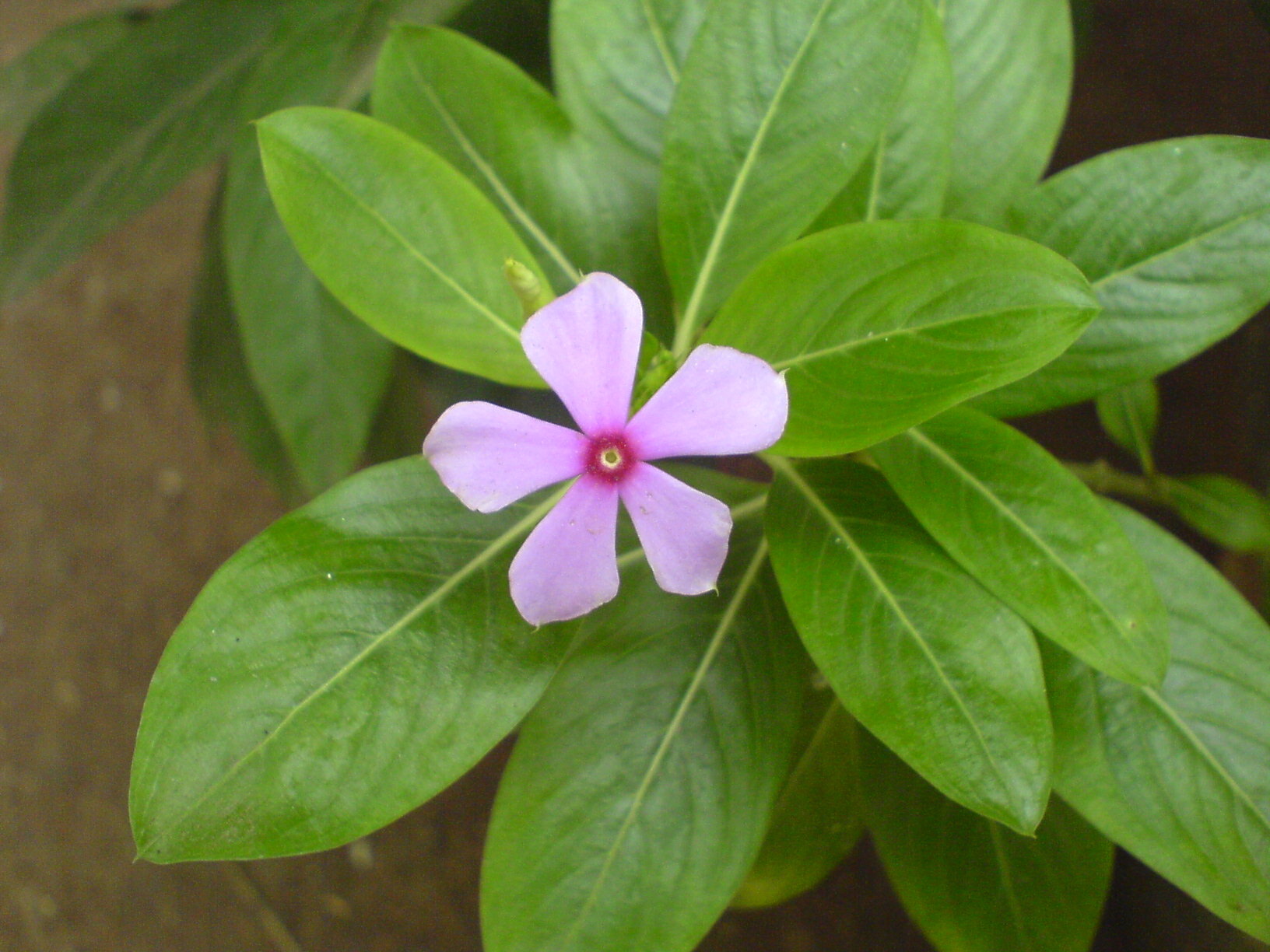
kat-uh-RANTH-us -- pure (immaculate) flower ... Dave's Botanary
RO-zee-us -- rosy ... Dave's Botanary
commonly known as: Madagascar periwinkle, periwinkle, rosy periwinkle, vinca • Assamese: নয়নতৰা noyontora • Bengali: নযনতাৰা nayantara • Bodo: गारमाय फुल garmai phul • Dogri: सदा सुहागन sada suhagan • Garo: giting bibal • Gujarati: બારમાસી barmaasi, સદાફૂલી sadaphuli • Hajong: চৰণতলা ফুল charantola phul • Haryanvi: सदाबहार sadabahar • Hindi: सदाबहार sadabahar • Kannada: ಬಟ್ಲ ಹೂವು batla hoovu, ಕೆಂಪು ಕಾಸಿಕಣಗಿಲು kempu kaasikanagilu, ನಿತ್ಯಪುಷ್ಪ nithyapushpa, ಸದಾಪುಷ್ಪ sadaapushpa, ತುರುಕು ಮಲ್ಲಿಗೆ turuku mallige • Kashmiri: گُلفرٛنگ गुलफ़्रिंग gulfering • Konkani: सदाफुली sadaphuli, सदापुष्पा sadapushpa • Kumaoni: सदाबहार sadabahar • Lodhi: सदा सवागाओं sada sawagaon • Malayalam: നിത്യകല്യാണി nithyakalyaani, ശവംനാറി shavamnaari • Malvani: सदानन sadanana • Marathi: सदाफुली sadaphuli • Mizo: kumtluang • Nepali: बाह्रमासे फूल baahramaase phool, नयन तारा nayan taaraa, सदाबहार sadaabahaar, सदाफूली sadaaphooli • Odia: ଆଇଁଷକାତି ainshakati, ସଦା ବିହାରୀ sada bihari • Pahari: सदाबहार sadabahar • Persian: گُلِ فرنگ gul-e-farang • Punjabi: ਰਤਣਜੋਤ ratanjot • Rabha: আফে নেকেন aphe neken • Rajasthani: सदाबहार sadabahar • Tamil: சுடுகாட்டுப்பூ cutukattuppu, நயனதாரா nayanthaaraa, நித்தியகலியாணி nittiya-kaliyani, துலுக்கமல்லிகை tulukka-mallikai • Telugu: బిళ్ళ గన్నేరు billa ganneru, నిత్య కళ్యాణి nithya kalyani • Tulu: ನಿತ್ಯಪುಷ್ಪೊ nithyapushpo
known for / parts made use of: leaves, roots, flowers, whole plant (medicinal, ornamental, flowers for worship) ... compiled from the web
botanical names: Catharanthus roseus (L.) G.Don ... homotypic synonyms: Vinca rosea L. ... and more at POWO, retrieved August 11, 2026
known for / parts made use of: leaves, roots, flowers, whole plant (medicinal, ornamental, flowers for worship) ... compiled from the web
Bibliography / etymology / notes
Links listed as references in the notes below, may not remain valid permanently. Portals / websites have a tendency to re-organize / revise their content, leading to change in URLs of pages in their site. Some sites may even close down at their own will. The bits about the languages of India mentioned below are merely some bare facts gathered from the internet; just enough to satisfy curiosity about "where" could the listed names be best prevalent in India. All English transliterated names to be taken sensu amplo.
~~~~~ ENGLISH ~~~~~
written and spoken widely, in most parts of India
Madagascar periwinkle, periwinkle, rosy periwinkle, vinca
- Flowers of India ... (accessed: August 11, 2026)
- Madagascar periwinkle — this is the most accurate common name. It correctly identifies the plant's native origin. Rosy periwinkle — this name distinguishes this pink/purple species from the true European periwinkle (Vinca minor), which is typically blue. Periwinkle — this is the general, everyday name; regular people and gardeners use it most often. Vinca — this is crucial for trade and horticulture. Nurseries and gardeners in India almost exclusively sell and refer to this plant as "Vinca". ... compiled from the web.
~~~~~ ASSAMESE ~~~~~
written in: Assamese (অসমীয়া) ... spoken in: Assam, Arunachal Pradesh, Meghalaya
নয়নতৰা noyontora
- for Vinca rosea L. ... XOBDO - Your gateway to multilingual knowledge and resources ... (accessed: August 11, 2026)
- Deka, Dipali (2007) - Ethno medico botanical study of certain tribes of Goalpara district, Assam :: Chapter 5 - Shodhganga :: a reservoir of Indian theses @ INFLIBNET
- Noyon (নয়ন) meaning "eye"; Tora (তৰা) meaning "star". Literally translated, it means "Star of the Eye" or the "Apple of the Eye" (used to describe someone or something very dear and deeply loved). ... compiled from the web.
~~~~~ BENGALI ~~~~~
written in: Bengali (বাংলা) ... spoken in: West Bengal, Assam, Jharkhand, Tripura, Andaman & Nicobar Islands
নযনতাৰা nayantara
- Paramita Maity and G.G.Maiti - Innovative Practices of Medicinal Uses of Cultivated Garden Plants by the Peoples of Purba Medinipur District, West Bengal. - International Research Journal of Basic and Applied Sciences • ISSN: 2455-6718 : RNI : WBENG/2016/76189 • Vol.4 • 2019 pp 18-35. ... (downloaded: August 13, 2026)
- নযনতাৰা (Nayantara) - literally translates to "Star of the Eye", used to describe someone or something very dear and deeply loved. Nayan (নযন) meaning "eye"; Tara (তাৰা) meaning "star". ... compiled from the web.
- চিরবসন্ত (Chirabasanta) — literally translates to "The Eternal Spring", highlighting the plant's resilient, permanent, year-round bloom cycle. চির (Chira) = eternal; বসন্ত (basanta). ... compiled from the web.
~~~~~ BODO ~~~~~
written in: Devanagari or Latin ... spoken in: Assam ... other names for this language: Boro
गारमाय फुल garmai phul
- for Vinca rosea L. ... XOBDO - Your gateway to multilingual knowledge and resources ... (accessed: August 11, 2026)
- Deka, Dipali (2007) - Ethno medico botanical study of certain tribes of Goalpara district, Assam :: Chapter 5 - Shodhganga :: a reservoir of Indian theses @ INFLIBNET
- गारमाय (garmai) — in the Bodo language, the word Garmai (or closely related roots) is fundamentally connected to "heat", "summer", or the season when the weather gets warm; फुल (phul) — meaning "flower". Catharanthus roseus thrives effortlessly under the blazing tropical sun when other delicate garden flowers wither away. By naming it garmai phul, the Bodo people beautifully classified it by its primary trait: "The Flower of the Summer Heat". ... compiled from the web.
~~~~~ DOGRI ~~~~~
written in: Devanagari (डोगरी) ... spoken in: Jammu & Kashmir ... spoken by the Dogras
सदा सुहागन sada suhagan
- Many thanks to OM Prakash Vidyarthi for help with this name ... facebook
- सदा (Sada) — means "always" or "forever"; सुहागन (Suhagan) — refers to "a married woman whose husband is alive", traditionally symbolizing a state of marital bliss, protection, and complete adornment. The absolute center of the natural pink/rose variety of the flower features a sharp, bright, contrasting crimson-red or deep pink "eye". To local folks, this striking red center looked exactly like the sindoor or bindi of a married woman. Because the plant blooms nonstop, day after day, it is viewed as a woman who is "forever adorned" and never loses her auspicious bridal glow. ... compiled from the web.
~~~~~ GARO ~~~~~
written in: Roman, Bengali-Assamese, A-Chik Tok'birim ... spoken in: Meghalaya, Assam
giting bibal
- Deka, Dipali (2007) - Ethno medico botanical study of certain tribes of Goalpara district, Assam :: Chapter 5 - Shodhganga :: a reservoir of Indian theses @ INFLIBNET
- Giting or Gittang typically denotes something "ever-fresh"; Bibal — meaning "flower". Thus "The Ever-Fresh Flower" meaning its resilient, year-round blooming nature. ... compiled from the web.
~~~~~ GUJARATI ~~~~~
written in: Gujarati (ગુજરાતી) ... spoken in: Gujarat, Dadra & Nagar Haveli, Daman & Diu
બારમાસી barmaasi, સદાફૂલી sadaphuli
- Biological Diversity of Gujarat - published by Gujarat Ecology Commission ... (downloaded: Dec 16, 2020)
- S Rajendra Kumar, S Kalavathy (2010) - Floristic status and its conservation in the forests of the north Gujarat region (NGR) Gujarat, India :: Chapter 4 :: Shodhganga :: a reservoir of Indian theses @ INFLIBNET
- બારમાસી barmaasi — this name translates to "All Year Round" or "Everbloomer". બાર (Bar) — means "Twelve"; માસી (maasi) — meaning "monthly". ... compiled from the web.
- સદાફૂલી sadaphuli translates directly to "The Constantly Flowering One". સદા (Sada) — means "always" or "constantly"; ફૂલી (Phuli) — means "flowering" or "bearing blossoms". ... compiled from the web.
~~~~~ HAJONG ~~~~~
written in: Bengali-Assamese (হাজং), Latin ... spoken in: Assam, Meghalaya, Arunachal Pradesh, and West Bengal
চৰণতলা ফুল charantola phul
- Deka, Dipali (2007) - Ethno medico botanical study of certain tribes of Goalpara district, Assam :: Chapter 5 - Shodhganga :: a reservoir of Indian theses @ INFLIBNET
- চৰণ (Choron) — means "feet" or "divine feet" (borrowed from Sanskrit); তলা (Tola) — means "underneath" or "at the base"; ফুল (Phul) — means "flower". The name literally translates to "The Flower at the Base of the Divine Feet". The Hajong people are traditionally a deeply devout agrarian community settled across southwestern Assam and the West Garo Hills of Meghalaya. One of their most sacred places of worship is the historic Charantala Temple [↗] in the West Garo Hills. ... compiled from the web.
~~~~~ HARYANVI ~~~~~
written in: Devanagari (हरियाणवी or हरयाणवी) ... spoken in: Haryana, Delhi
सदाबहार sadabahar
- Department of Bio Sciences, Maharshi Dayanand University (2002) - Medicinal plants of some districts of Haryana an ethnobotanical survey :: Chapter 4 - Shodhganga :: a reservoir of Indian theses @ INFLIBNET ... (downloaded: Feb 9, 2022)
- सदाबहार sadabahar translates to "Everbloomer" or "flowering in all the seasons". सदा (Sada) — meaning "always" or "ever"; बहार (Bahar) — meaning "in bloom" or "in flowering". ... compiled from the web.
~~~~~ HINDI ~~~~~
written in: Devanagari (हिन्दी) ... spoken in: Delhi, Uttar Pradesh, Bihar, Chhattisgarh, Haryana, Jharkhand, Madhya Pradesh, Rajasthan, Uttarakhand
सदाबहार sadabahar
- Wagh, Vijay & Jain, Ashok. (2014). Floristic Diversity of Jhabua District, Madhya Pradesh, India. 6. 146-167. 10.5829/idosi.ajps.2013.6.4.1116. ... (downloaded: Nov 12, 2024)
- सदा (Sada) — meaning "always" or "ever"; बहार (Bahar) — meaning "in bloom" or "in flowering". The name literally means "Everbloomer" or "flowering in all the seasons". ... compiled from the web.
~~~~~ KANNADA ~~~~~
written in: Kannada (ಕನ್ನಡ) ... spoken in: Karnataka
ಬಟ್ಲ ಹೂವು batla hoovu
- for Vinca rosea L. ... Kittel, Ferdinand. Kittel's Kannada-English dictionary. Rev. and enl. ed. [Madras] University of Madras, 1968-1971.
- ಬಟ್ಲ ಹೂವು (Batla hoovu) — meaning "The Cup Flower" (from battalu, meaning a bowl or cup). This name highlights the flared, tube-like shape of the blossom. It is also a fascinating example of localized folk taxonomy, where the name is shared with Crape Jasmine due to their nearly identical pinwheel structures and ritual uses. ... compiled from the web.
ಕೆಂಪು ಕಾಸಿಕಣಗಿಲು kempu kaasikanagilu
- Subrahmanya, Prasad K - Exploration and elucidation of traditional medicinal plants of erstwhile Tulunadu and surrounding area of Kerala and Karnataka :: Chapter 4 :: Shodhganga - a reservoir of Indian theses @ INFLIBNET
- for Vinca rosea L. ... Five Hundred Indian Plants by Messrs. C. Stolz and G. Plebst, Basel Mission, Mangalore ... (downloaded: Nov 24, 2024)
- for Vinca rosea L. ... Cameron, John, F. L. S. — Catalogue of Plants in the Botanical Garden, Bangalore, and its vicinity ... (downloaded: Sep 5, 2020)
- The prefix Kaasi (ಕಾಸಿ or ಕಾಸೀ) refers directly to Kaashi (Varanasi/Benaras), the ancient holy city in Northern India deeply associated with Lord Shiva, while kanigalu / kanigilu / kanagilu / kanigile (ಕಣಿಗಲು / ಕಣಿಗಳು / ಕಣಿಗಿಲು / ಕಣಗಿಲು / ಕಣಿಗಿಲೆ) are regional variations of the Kannada word for the native Oleander (Nerium oleander). Conceptually, the name translates to 'The Oleander of Kaashi'. Because Kaashi is historically revered as the ultimate spiritual heartland of Lord Shiva, local devotees in the Tulunadu region (spanning the coastal Karnataka and Kerala border) traditionally prefix 'Kaasi' to the names of specific flora whose blossoms are heavily favoured in Shaivite ritual worship. ... compiled from the web.
- In Karnataka, year-round availability of Catharanthus roseus for daily worship earned it the name ಕೆಂಪು ಕಾಸಿಕಣಗಿಲು (Kempu Kaasikanagilu — The Rosy Oleander of Kashi). ... compiled from the web.
ನಿತ್ಯಪುಷ್ಪ nithyapushpa
- Subrahmanya, Prasad K - Exploration and elucidation of traditional medicinal plants of erstwhile Tulunadu and surrounding area of Kerala and Karnataka :: Chapter 4 :: Shodhganga - a reservoir of Indian theses @ INFLIBNET
- ನಿತ್ಯಪುಷ್ಪ nithyapushpa — literally translates to "The Ever-Blooming Flower". ನಿತ್ಯ (Nithya) — meaning "always", "daily" or "ever"; ಪುಷ್ಪ (Pushpa) — meaning "flower". ... compiled from the web.
ಸದಾಪುಷ್ಪ sadaapushpa
- Subrahmanya, Prasad K - Exploration and elucidation of traditional medicinal plants of erstwhile Tulunadu and surrounding area of Kerala and Karnataka :: Chapter 4 :: Shodhganga - a reservoir of Indian theses @ INFLIBNET
- for Vinca rosea L. ... Five Hundred Indian Plants by Messrs. C. Stolz and G. Plebst, Basel Mission, Mangalore ... (downloaded: Nov 24, 2024)
- ಸದಾಪುಷ್ಪ sadaapushpa — translates directly to "Ever-Flowering". ಸದಾ (Sadaa) meaning "Always"; ಪುಷ್ಪ Pushpa meaning "Flower". ... compiled from the web.
ತುರುಕು ಮಲ್ಲಿಗೆ turuku mallige
- for Vinca rosea L. ... Alar - an authoritative Kannada-English dictionary corpus created by V. Krishna
- S G Narsimhachar - Latin and Kannada names of indigenous and medicinal plants of Mysore - Mandayam Digital Library ... (downloaded: Nov 27, 2020)
- ತುರುಕು (Turuku) — historically, in old Kannada literature, lexicon, and administrative records, Turuku (or Turuka / Turushka) was the vernacular term used to describe "Turks", "Persians" or travelers arriving from the Middle East empires; ಮಲ್ಲಿಗೆ (Mallige) — this is the well-known word for "Jasmine". "Turuku mallige" literally translates to "The Turkish Jasmine" or "The Persian Jasmine". Though knowing that Periwinkle looks nothing like a vining jasmine plant, the historical kingdom of Mysore noted that it arrived via colonial/western trade channels and tagged it as a Turuku variant of their beloved Jasmine. ... compiled from the web.
~~~~~ KASHMIRI ~~~~~
written in: Koshur (Perso-Arabic كٲشُر), Devanagari (कश्मीरी) ... spoken in: Kashmir ... other names for this language: Koshur
گُلفرٛنگ गुलफ़्रिंग gulfering
- Gupta, Monika & Kaushik, Shuchi & Tomar, Rajesh Singh & Mishra, Raghvendra. (2017). An overview of Catharanthus roseus and medicinal properties of their metabolites against important diseases. - European Academic Research. 5. 1237-1247. ... (accessed: August 13, 2026)
- While the historical Persian name is compiled as separate words (گُلِ فرنگ — Gul-e-farang), the Kashmiri language offers a brilliant linguistic evolution. As the exotic species traveled up into the valley via old colonial trade channels, Kashmiri speakers compressed the entire descriptive phrase into a single, localized compound name: Gulfering meaning "The Foreigner's Flower" or "The European's Flower". ... compiled from the web.
~~~~~ KONKANI ~~~~~
written in: Devanagari (कोंकणी) / Kannada (ಕೊಂಕಣಿ) / Malayalam (കൊങ്കണി) / Perso-Arabic (کونکنی) / Romi (Konknni) ... spoken in: Goa, Karnataka, Maharashtra, Kerala, Gujarat
सदाफुली sadaphuli
- V D Vartak (1966) - Enumeration of plants from Gomantak India with a note on botanical excursions to the Castlerock area :: Chapter 5 :: Shodhganga :: a reservoir of Indian theses @ INFLIBNET
- सदाफुली sadaphuli — literally means "Everbloomer" or "flowering in all the seasons". सदा (Sada) — meaning "always" or "ever"; फुली (Phuli) — meaning "in bloom" or "in flowering". ... compiled from the web.
सदापुष्पा sadapushpa
- Maneesha SR, Safeena SA, Solomon Rajkumar, V Arunachalam, Parveen Kumar (2022). Plants of Dhanvantari Vatika - A catalogue of medicinal and aromatic plants available at ICAR-CCARI, Old Goa. Technical Bulletin No: 72. ICAR - Central Coastal Agricultural Research Institute, Ela, Old Goa-403 402, Goa, India. pp1-88 ... (downloaded: Sep 8, 2023)
- सदापुष्पा sadapushpa — translates directly to "Ever-Flowering". सदा (Sada) meaning "Always"; पुष्पा Pushpa meaning "Flower". ... compiled from the web.
~~~~~ KUMAONI ~~~~~
written in: Devanagari ... spoken in: Uttarakhand
सदाबहार sadabahar
- Renu, Bharti, Kumar, D., & Arya, P. (2023). Traditional uses of ethno-medicinal plants for the treatment of skin ailments in district Pithoragarh, Uttarakhand, India. Environment Conservation Journal, 24(3), 47–53. ... (downloaded: April 26, 2025)
- सदाबहार (Sadabahar) — "The Ever-Spring". Lacking a prehistoric native name for this tropical exotic introduction, the mountain communities of eastern Uttarakhand naturally adopted and naturalized Sadabahar to map the plant's relentless, year-round resilience. ... compiled from the web.
~~~~~ LODHI ~~~~~
written in: Devanagari ... spoken in: Odisha, West Bengal, Jharkhand ... spoken by: Lodha people
सदा सवागाओं sada sawagaon
- Sharma, Tarun & Bhide, Bhargav & Acharya, Rabinarayan. (2019). Wound healing activity of certain root drugs-A review from classical and ethnomedicinal claims. International Journal of Green Pharmacy. 13. 21-41. ... (downloaded: August 13, 2026)
- सदा (Sada) — means "always" or "forever"; सवागाओं (Sawagaon) — refers to "a married woman whose husband is alive", traditionally symbolizing a state of marital bliss, protection, and complete adornment. Because the plant blooms nonstop, day after day, it is viewed as a woman who is "forever adorned" and never loses her auspicious bridal glow. ... compiled from the web.
~~~~~ MALAYALAM ~~~~~
written in: Malayalam (മലയാളം) ... spoken in: Kerala, Lakshadweep
നിത്യകല്യാണി nithyakalyaani, ശവംനാറി shavamnaari
- Subrahmanya, Prasad K - Exploration and elucidation of traditional medicinal plants of erstwhile Tulunadu and surrounding area of Kerala and Karnataka :: Chapter 4 :: Shodhganga - a reservoir of Indian theses @ INFLIBNET
- K A Anil Kumar and P S Udayan - Plant diversity of the Attappady hills, Western Ghats :: Chapter 4 :: Shodhganga - a reservoir of Indian theses @ INFLIBNET
- നിത്യ (Nithya) — meaning "daily," "always," or "ever"; കല്യാണി (Kalyaani) — in Malayalam and Sanskrit, this means "auspicious", "blessed", "beautiful" or "one who brings good fortune". It is also a revered title for the Divine Feminine form and deity (Goddess Parvati). Literal meaning of the name: "The Ever-Auspicious One" or "The Forever Beautiful". This cultural name implies that the plant brings a permanent state of auspiciousness, beauty, and positive energy to the household garden because its fresh blooms are always available for daily offerings. ... compiled from the web.
- ശവം (Shavam) — meaning "corpse" or "dead body"; നാറി (Naari) — derived from the root naaruka, meaning "stinker" or "something that emits a foul odor". The name translates to "The plant that stinks like a corpse". If the green leaves are crushed or the stems are broken, the milky sap releases a sharp, bitter, highly unpleasant, and nauseating herbal odor. Locals associated this distinct, unpleasant smell with death and decay, and thus the name. Historically, it was widely planted — or got naturalized — in unattended village cemeteries and burial grounds. Because the plant is incredibly hardy, drought-resistant, and entirely ignored by grazing cattle due to its toxicity, it thrives completely unattended. ... compiled from the web.
VERNACULAR LORE
ആദംഹൌവ്വ ചെടി aadamhauva chedi, സെമിത്തേരിചെടി semitherichedi, ശതപുഷ്പി shathapushpi, ശവകോട്ടപ്പച്ച shavakottappacha, ശ്മശാനപ്പൂചെടി shmashaanappoochedi, ഉഷമലരി ushamalari, വിഷനാരയണി vishanaarayani
- State Medicinal Plants Board (SMPB) Kerala ... (accessed: August 12, 2026)
- ആദംഹൌവ്വ ചെടി (Aadamhauva chedi) — translates to "The Adam and Eve Plant". This is a brilliant piece of folk taxonomy. Because the plant's flowers very commonly bloom in distinct, close-knit pairs from the leaf axils, local Christian communities in Kerala creatively named it after the world's first biblical pair. ... compiled from the web.
- സെമിത്തേരിചെടി (Semitherichedi) — literally translates to "The Cemetery Plant" (Semitheri = Cemetery + Chedi = Plant). ... compiled from the web.
- ശതപുഷ്പി (Shathapushpi) — Shatha means "hundred" and pushpi means "flowering" or "flower-borne". It means "The Hundred-Flowered Plant", emphasizing its highly prolific blooming capacity. ... compiled from the web.
- ശവകോട്ടപ്പച്ച (Shavakottappacha) — translates to "Graveyard Greenery" (Shavakotta = Graveyard + Pacha = Greenery). ... compiled from the web.
- ശ്മശാനപ്പൂചെടി (Shmashaanappoochedi) — translates to "The Crematorium Flower Plant" (Shmashaanam = Crematorium/Burial Ground + poochedi = flowering plant). ... compiled from the web.
- ഉഷമലരി (Ushamalari) — a deeply poetic and beautiful name. Usha means "dawn" or "early morning" and malari is an old Malayalam word for "blossom/flower". It translates to "The Blossom of the Dawn", referring to how its fresh flowers greet households early in the morning. ... compiled from the web.
- വിഷനാരയണി (Vishanaarayani) — Visha (വിഷ) means "poison/toxin"; Narayani (നാരയണി) is a prominent name for Goddess Durga/Lakshmi, or the ultimate Divine Feminine power — specifically representing the supreme protector, nurturer, and healer who destroys evils and neutralizes forces of toxicity. This name explicitly warns handlers of the plant's dangerous, highly toxic nature if ingested raw, highlighting its medical classification in local folklore. From the traditional healer's perspective, it focuses on the elevated, curative side of the toxicity (its power to fight toxins or illnesses like a protective goddess). ... compiled from the web.
~~~~~ MALVANI ~~~~~
written in: Devanagari (मालवणी) ... spoken in: Maharashtra (only in the Sindhudurg district), north Goa (especially Pernem taluka) ... a dialect of Konkani with significant Marathi influences and loanwords
सदानन sadanana
- Many thanks to Nitin Kawthankar for help with this name ... facebook
- सदानन sadanana — translates literally to "The Fair-Faced One" or "The Forever-Beautiful Face" from sada (always) + anana (face). Recorded in classical Sanskrit lexicons as a term for a fair or beautiful countenance, this elusive regional name from the Konkan coast is a brilliant piece of visual poetry. It treats the flat, clean, and perfectly symmetrical open petals of the flower as a collection of bright faces that remain permanently fresh and unblemished through every season. ... compiled from the web.
~~~~~ MARATHI ~~~~~
written in: Devanagari (मराठी) ... spoken in: Maharashtra, Karnataka
सदाफुली sadaphuli
- The Gazetteer Department - Maharashtra State ... महाराष्ट्रातील वनस्पतीशास्त्र आणि वनसंपदा ... (downloaded: Sep 5, 2020)
- सदा (Sada) — meaning "always" or "ever"; फुली (Phuli) — meaning "in bloom" or "in flowering". The name literally means "Everbloomer" or "flowering in all the seasons". ... compiled from the web.
~~~~~ MIZO ~~~~~
written in: Latin, Bengali-Assamese ... spoken in: Mizoram ... other names for this language: Lushai, Duhlian
kumtluang
- for Vinca rosea L. ... R.Thansanga - Mizoram Hmulphurh leh Thlai Hmingte (Mizo - Botanical names) THUHMAHRUAI ... (downloaded: Aug 30, 2023)
- O. P. Singh et. al. - State of Environment Report of Mizoram 2016 - Department of Environment, Forests & Climate Change, Government of Mizoram ... (downloaded: Feb 9, 2022)
- List of Ethno-medicinal plants in Mizoram state with uses - State Medicinal Plants Board - Mizoram
- ENVIS :: Biological Diversity In Mizoram ... (downloaded: Aug 18, 2022)
- Rai, Prabhat. (2010). Ethnomedicinal Plant Resources of Mizoram, India: Implication of Traditional Knowledge in Health Care System. Ethnobotanical Leaflets. 14.
- Kumtluang — translating literally to "Everlasting" or "Throughout the Years". Borrowed from a Mizo poetic term used to denote eternity, this name glorifies the plant's unbroken, year-round flowering cycle. ... compiled from the web.
~~~~~ NEPALI ~~~~~
written in: Devanagari (नेपाली) ... spoken in: Nepal, West Bengal, Assam, Sikkim, Himachal Pradesh, Uttarakhand, Jammu & Kashmir
बाह्रमासे फूल baahramaase phool, नयन तारा nayan taaraa, सदाबहार sadaabahaar, सदाफूली sadaaphooli
- Many thanks to Saroj Kumar Kasaju for help with these names ... eFloraofIndia
- बाह्रमासे फूल baahramaase phool — this name literally translates to "The Twelve-Month Flower". बाह्र (Baahra) — means "Twelve"; मासे (Maase) — derived from maas, meaning "month"; फूल (Phool) — means "flower". ... compiled from the web.
- नयन तारा nayan taaraa - literally translates to "Star of the Eye", used to describe someone or something very dear and deeply loved. Nayan (नयन) meaning "eye"; Tara (तारा) meaning "star". ... compiled from the web.
- सदाबहार sadaabahaar — this name translates to "Ever-Spring" or "Forever Blooming" (Sada = Always + Bahar = Spring).
- सदाफूली sadaaphooli translates directly to "The Constantly Flowering One". सदा (Sadaa) — means "always" or "constantly"; फूली (Phooli) — means "flowering" or "bearing blossoms". ... compiled from the web.
~~~~~ ODIA ~~~~~
written in: Odia (ଓଡ଼ିଆ) ... spoken in: Odisha, Andaman & Nicobar Islands
ଆଇଁଷକାତି ainshakati
- The Useful Plants of India (CSIR, Publications & Information Directorate)
- ଆଇଁଷ (Ainsha) — this is a unique Odia adjective used to denote a strong, distinct "fishy odor" or the raw, pungent scent associated with raw fish and marine scales; କାତି (Kati) — means "scales" (specifically the small, flat, overlapping protective scales found on the skin of a fish). Literally translated, Ainshakati functions as "The Fish-Scale Stinker". Visually, it tracks the orderly, overlapping structure of the plant's sleek foliage. Functionally, it stands as a brilliant geographical twin to the Malayalam folk name Shavamnaari. Southern communities linked the pungent, toxic, crushed sap to the smell of a corpse, Odia folk architecture mapped the bitter aroma to raw fish, embedding an immediate warning of toxicity into the name. ... compiled from the web.
ସଦା ବିହାରୀ sada bihari (or ସଦା ବେହାରୀ sada behari)
- Praharaj, G.C. Pūrṇṇachandra Orḍiā bhāshākosha: a lexicon of the Oriya language. Cuttack: Utkal Sahitya Press, 1931-1940.
- Behera, Kambaska Kumar (2006) Ethnomedicinal Plants used by the Tribals of Similipal Bioreserve, Orissa, India: A Pilot Study, Ethnobotanical Leaflets: Vol. 2006: Iss. 1, Article 17. ... (downloaded: Nov 25, 2024)
- ସଦା (Sada) — means "always", "permanently" or "forever"; ବିହାରୀ (Bihari - derived from Vihar) — in Odia and Sanskrit, Vihar or Bihara means "to roam", "to dwell", "to bloom/exist in a state of pleasure" or "to play/occupy a space". Put together, Sada Bihari translates literally to "The one that is always dwelling in bloom" or "The Forever-Present One", "The Eternal Dweller". ... compiled from the web.
~~~~~ PAHARI (or PAHADI) ~~~~~
written in: Devanagari (पहाड़ी), Perso-Arabic (پہاڑی) ... variety of languages, dialects and language groups, spoken in Himachal Pradesh, Jammu and Kashmir, Uttarakhand
सदाबहार sadabahar
- Kumar, N. "Common Medicinal Plants Available at Joginder Nagar, District Mandi (H.P.), India". Research in Pharmacy, vol. 4, no. 4, Oct. 2015, ... (downloaded: Nov 20,2024)
- सदाबहार (Sadabahar) — literal meaning "The Ever-Spring". Because the plant is an exotic introduction, local Pahari dialects adopted the standard Hindi loanword Sadabahar, a practical adaptation driven by its widespread use in regional Ayurvedic research centers and forest nurseries. ... compiled from the web.
~~~~~ PERSIAN ~~~~~
written in: Farsi (فارسی) ... almost a defunct language; spoken in: West Bengal, Jharkhand, Maharashtra, Bihar
گُلِ فرنگ gul-e-farang
- Flowers of India ... (accessed: August 11, 2026)
- for Vinca rosea L. ... Platts, John T. (John Thompson). A dictionary of Urdu, classical Hindi, and English. London: W. H. Allen & Co., 1884.
- گُلِ (Gul) — means "flower"; فرنگ (Farang) — historically derived from "Frank", this word was used across Persia, India, and the Ottoman Empire to describe "Europeans", "Foreigners" or "of the West". Literally translated, "Gul-e-farang" means "The Foreigner's Flower" or "The European's Flower". ... compiled from the web.
~~~~~ PUNJABI ~~~~~
written in: Gurmukhi (ਪੰਜਾਬੀ) ... spoken in: Punjab
ਰਤਣਜੋਤ ratanjot
- for Vinca rosea L. ... Singh, Maya. The Panjabi dictionary. Lahore: Munshi Gulab Singh & Sons, 1895.
- ਰਤਣ (Ratan) — means "jewel" or "gem"; ਜੋਤ (Jot) — means "light", "glow" or "flame". The name literally translated, Ratanjot means "The Glow of the Jewel". The distinct, vibrant "eye" (the sharp, glowing red centre of the five flat petals of the standard pink/magenta variety of the flower) resembled the brilliant, concentrated light glinting off a polished ruby or gem. ... compiled from the web.
~~~~~ RABHA ~~~~~
written in: Assamese (ৰাভা), Bengali, English ... spoken in: Assam, Nagaland, West Bengal, Meghalaya
আফে নেকেন aphe neken
- Deka, Dipali (2007) - Ethno medico botanical study of certain tribes of Goalpara district, Assam :: Chapter 5 - Shodhganga :: a reservoir of Indian theses @ INFLIBNET
- Aphe / Ephe — in several closely related dialects of Rabha language, this denotes "a cluster", "a spread", or "a low bush/shrub structure"; Neken — this is often structurally linked to visual traits — most notably meaning "slanted", "drooping", "nodding" or "looking down". The name thus meaning "The Low Nodding Shrub", beautifully describing the sprawling, slightly drooping physical growth habit of the plant. ... compiled from the web.
~~~~~ RAJASTHANI ~~~~~
written in: Devanagari (राजस्थानी) ... spoken in: Rajasthan
सदाबहार sadabahar
- R. P. Kanther - DOMINANT FLORA OF PALI-DISTRICT, RAJASTHAN, INDIA J. Indian Bot. Soc., Vol. 100 (1&2) 2020:01-15 ... (downloaded: Jun 15, 2024)
- Tripathi, Yogesh & Prabhu, V.V. & Pal, R.S. & Mishra, R.N.. (1996). Medicinal Plants of Rajasthan in Indian System of Medicine. Ancient Science of Life. 15. 190-212.
- Manju Chaudhary and S.K. Shringi - Floristic Composition of Beer Jhunjhunu Conservation Reserve of Rajasthan, India - The Biobrio 4(1 & 2), 2017 ... (downloaded: Feb 9, 2022)
- सदाबहार sadabahar — this name literally means "Everbloomer" or "flowering in all the seasons". सदा (Sada) — meaning "always" or "ever"; बहार (Bahar) — meaning "in bloom" or "in flowering". ... compiled from the web.
~~~~~ TAMIL ~~~~~
written in: Tamil (தமிழ்) ... spoken in: Tamil Nadu, Puducherry, Andaman & Nicobar Islands
சுடுகாட்டுப்பூ cutukattuppu, துலுக்கமல்லிகை tulukka-mallikai
- for Vinca rosea L. ... University of Madras. Tamil lexicon. [Madras], University of Madras, 1924-1936.
- பூ (Pu / Poo) — means "flower"; சுடுகாடு (Cutukatu / Sudukadu) — this is the specific Tamil word for a crematorium, burning ghat, or graveyard. The name literally means "The Graveyard Flower" or "The Crematorium Flower". It is also frequently recorded in Tamil botanical databases as சுடுகாட்டுமல்லி (Cutukattu-malli), meaning "The Crematorium Jasmine" [↗]. Because the plant contains toxic alkaloids, goats and cattle completely ignore it. As a result, it grows densely and unchecked over isolated village burial grounds and burning ghats. Locals strongly associated the sight of these bright pink and white blooms with places of death, earning it this sombre title. ... compiled from the web.
- மல்லிகை (Mallikai) — means "Jasmine"; துலுக்க (Tulukka) — just like Turuku in Kannada, Tulukka (derived from the Sanskrit Turushka) was the historic Tamil term used from the medieval era onward to describe "Turks" or traders arriving from the Middle East / Central Asia. The Catharanthus roseus plant was tagged as a "Turkish Jasmine" variant by locals in Tamil Nadu who noticed it arriving via Middle Eastern trade ports. ... compiled from the web.
நயனதாரா nayanthaaraa, நித்தியகலியாணி nittiya-kaliyani
- விக்கிப்பீடியா - கட்டற்ற கலைக் களஞ்சியம்... Wikipedia - The Free Encyclopedia ... (accessed: August 12, 2026)
- The name Nayanthaaraa (நயனதாரா) translates to "Star of the Eye" — used to describe someone or something very dear and deeply loved. ... compiled from the web.
- நித்திய (Nittiya) — means "eternal", "daily", or "ever"; கலியாணி (Kaliyani / Kalyani) — means "auspiciousness", "beauty", or "bride". In Tamil Nadu culture, an auspicious woman adorns herself daily. Because this plant is never bare and always wears fresh blossoms like a beautifully adorned Goddess, it earned the title of "The Ever-Auspicious One". ... compiled from the web.
~~~~~ TELUGU ~~~~~
written in: Telugu ( తెలుగు) ... spoken in: Andhra Pradesh, Telangana, Puducherry
బిళ్ళ గన్నేరు billa ganneru, నిత్య కళ్యాణి nithya kalyani
- Flora Andhrika - Plant Wealth of Andhra Pradesh, India ... (accessed: August 13, 2026)
- Billa (బిళ్ళ) — means any round object like "disc" or "coin"; Ganneru (గన్నేరు) is the traditional name for the native Oleander (Nerium oleander), a cousin species of Catharanthus roseus. The name బిళ్ళ గన్నేరు (Billa ganneru) literally translates to "The Disc Oleander". ... compiled from the web.
- In Telugu culture, నిత్య (Nithya) means "eternal" or "daily", and కళ్యాణి (Kalyani) means "auspiciousness", "well-being", or "a bringer of good fortune". Just like in Tamil Nadu, Telugu households value this plant for its unbroken, daily supply of fresh blossoms for standard morning worship. It represents a permanent state of domestic beauty and sacred continuity. ... compiled from the web.
~~~~~ TULU ~~~~~
written in: Tigalari (Tulu) was used for writing Vedic texts in Sanskrit, Kannada (ತುಳು), Malayalam (തുളു) ... spoken in: Karnataka, north Kerala
ನಿತ್ಯಪುಷ್ಪೊ nithyapushpo
- Subrahmanya, Prasad K - Exploration and elucidation of traditional medicinal plants of erstwhile Tulunadu and surrounding area of Kerala and Karnataka :: Chapter 4 :: Shodhganga - a reservoir of Indian theses @ INFLIBNET
- ನಿತ್ಯ (Nithya) — meaning "always", "daily" or "ever"; ಪುಷ್ಪೊ (Pushpo) — meaning "flower" (cognate to the Sanskrit/Kannada Pushpa). Thus the name literally translates to "The Ever-Blooming Flower". ... compiled from the web.
~~~~~ KNOWN DISTRIBUTION in INDIA ~~~~~
Introduced into the mainland and its islands, naturalized in scrub land.
- Hassler, Michael (1994 - 2026): World Plants. Synonymic Checklist and Distribution of the World Flora. Version 26.08; last update Aug. 2nd, 2026. Last accessed 11/08/2026 (dd/mm/yyyy).
~~~~~
Created on: 18:43 10-08-2026 ¦ Last updated: 12:40 14-08-2026 (DD-MM-YYYY)
~~~~~
.


No comments:
Post a Comment